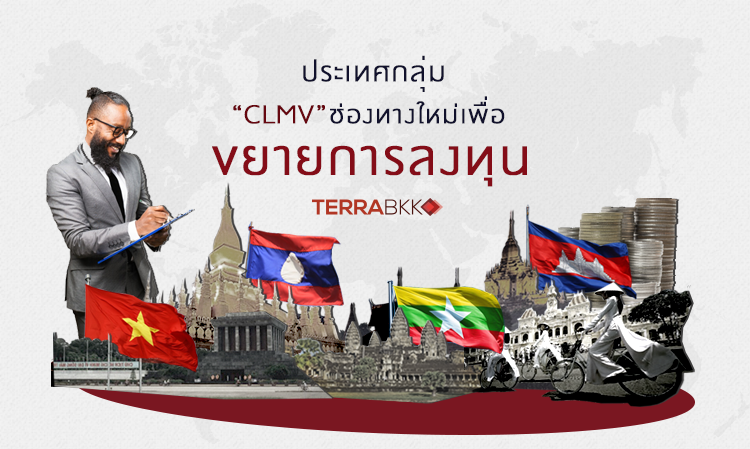
CLMV Countries: A New Path for Investment Expansion
Currently, we can observe that Thailand's economic growth rate is relatively low each year. Furthermore, the growth trend in the next few years is insufficient for companies in the country to expand their investments as desired. As a result, expanding investments abroad has become a focal point for investors, particularly in neighboring countries within the CLMV (Cambodia, Laos, Myanmar, Vietnam) group.
Getting to Know the CLMV Group
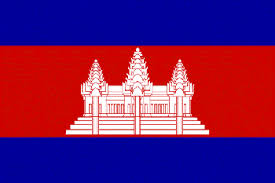
Cambodia
Capital: Phnom PenhLanguage: Khmer is the official language, followed by English, French, Vietnamese, and Chinese.
Population: Composed of 94% Khmer, 4% Chinese, and 2% others.
Religion: Predominantly Theravada Buddhism.
Governance: Parliamentary democracy with a constitutional monarchy.
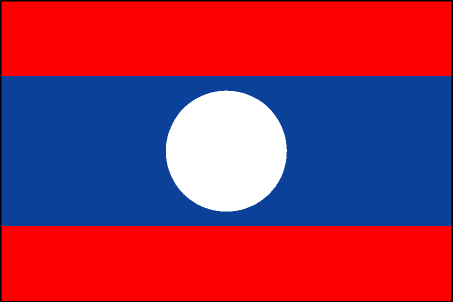
Laos
Capital: Vientiane
Language: Lao is the official language.
Population: Composed of 68% Lowland Lao, 22% Upland Lao, and 9% Highland Lao, totaling about 68 ethnic groups.
Religion: 75% Buddhist, 16% animist.
Governance: Socialist communist.
Myanmar
Capital: Naypyidaw
Language: Burmese is the official language.
Population: Composed of 135 ethnic groups, with 8 major nationalities: 68% Burmese, 8% Shan, 7% Karen, 4% Rakhine, 3% Chinese, 2% Mon, 2% Indian.
Religion: 90% Buddhist, 5% Christian, 3.8% Muslim.
Governance: Military dictatorship governed by the State Peace and Development Council.
Vietnam
Capital: Hanoi
Language: Vietnamese is the official language.
Population: Composed of 80% Vietnamese, 10% Khmer.
Religion: 70% Mahayana Buddhism, 15% Christian.
Governance: Socialist system with the Communist Party as the sole political party.
Investment Opportunities
First Point: Natural Resources Richer than Thailand
It must be acknowledged that our neighboring countries possess more abundant natural resources than Thailand today, including oil, natural gas, and water sources for electricity generation.
Resource Highlights of Each Country
Cambodia - Oil, natural gas, forests, water sources, iron ore, manganese, phosphate, gemstones.
Laos - Forests, water sources, gypsum, tin, gold, gemstones.
Myanmar - Petroleum, coal, natural gas, forests, water sources, tin, tungsten, iron ore, zinc, copper, lead, marble, limestone, gemstones.
Vietnam - Coal, oil, natural gas, phosphate, manganese, bauxite, chrome, forests.
Second Point: Population Growth Rate in the Countries
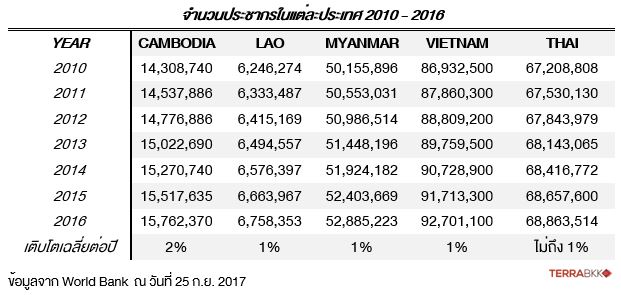
Since 2010, Thailand's population growth rate has been relatively low, with less than 300,000 people added per year, and it continues to decline, averaging less than 1% growth annually. In contrast, neighboring countries like Laos, Myanmar, and Vietnam continue to see population growth exceeding 1% per year, with Cambodia standing out at a remarkable 2% annual growth rate sustained over a long period.
Countries with significant population growth indicate a large young workforce. This demographic is generally enthusiastic and hardworking in building their future, resulting in effective work output. Additionally, a larger working-age population impacts the minimum wage rates, which are considerably lower in neighboring countries compared to Thailand.
Third Point: Highest Economic Growth Potential in the World
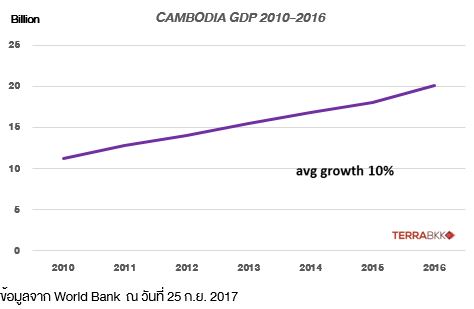
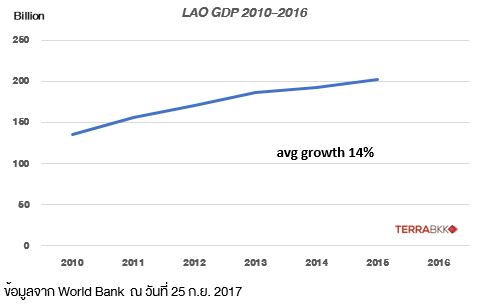
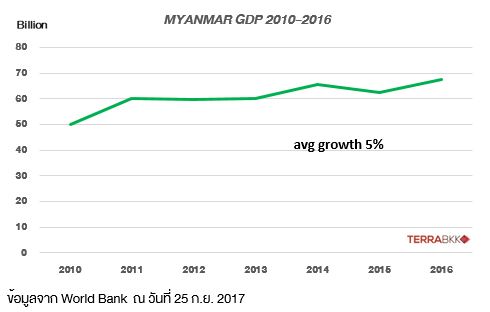
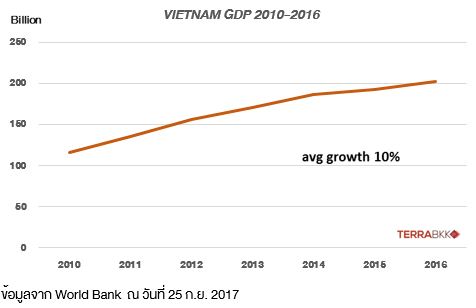
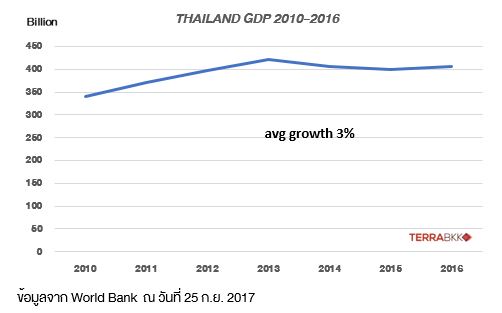
The economic growth rates of CLMV countries over the past 5-6 years have been significantly high compared to other countries. From 2010 to 2016, countries like Vietnam, Myanmar, and Laos experienced average annual GDP growth rates of up to 10%, with Laos achieving the highest GDP growth rate of 14% per year, while Myanmar's rate was around 5% per year. In comparison, Thailand's GDP growth rate has been relatively low in recent years, averaging only 3% from 2010 to 2016.
*GDP (Gross Domestic Product) refers to the market value of final goods and services produced within a country during a specific period, regardless of which country's resources were used to produce them.
TerraBKK believes that factors such as natural resources, population growth, and economic growth rates make the CLMV countries a favorable option for market expansion in business. However, investors must thoroughly study various information before investing abroad, as each country has different environments and regulations.