New Real Estate Trends: Seeking Japanese Partnerships
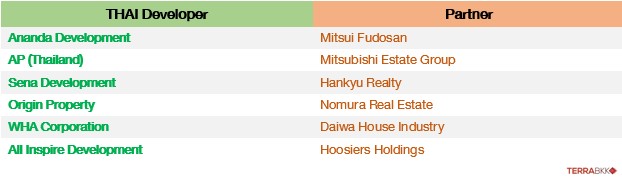
In the past two to three years, it has become evident that many real estate development companies, both new and established, have launched several joint investment partnerships with Japanese firms. TerraBKK has compiled information on Thai real estate companies that have partnered with Japanese developers, showcasing the types of joint ventures and projects they are working on together.
Ananda Development
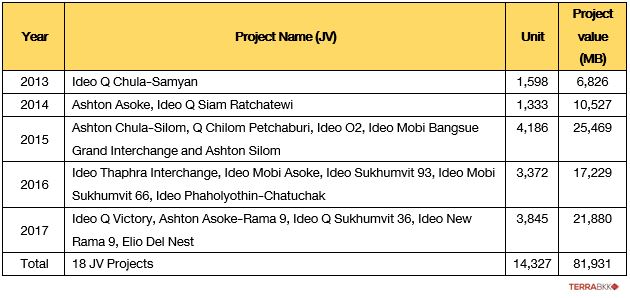
Ananda Development has partnered with Mitsui Fudosan Group to develop condominium projects through five subsidiaries: Ananda MF Asia Bangna Co., Ltd., Ananda MF Asia Chidlom Co., Ltd., Ananda MF Asia Chong Nonsi Co., Ltd., Ananda MF Asia Tao Pun Co., Ltd., and Ananda MF Asia Thapra Co., Ltd. Each joint venture company holds a 51% stake, while Mitsui holds 49%. Since 2013, there have been 18 joint venture projects with a total value of approximately 82 billion baht.
AP (Thailand)
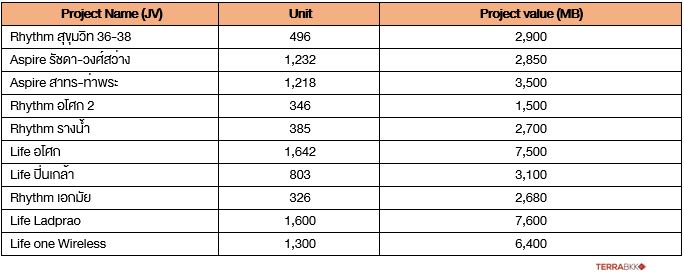
AP (Thailand) Public Company Limited has partnered with Mitsubishi Estate Group, one of Japan's leading real estate developers, to jointly develop projects through their respective subsidiaries. The shareholding ratio is AP 51% and Mitsubishi 49%. Currently, there are 10 joint projects with a total value of approximately 40 billion baht.
Sena Development
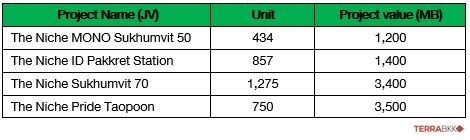
Sena Development Co., Ltd. has signed a joint venture agreement and a share purchase agreement through Sena Development A3 Co., Ltd., granting Hankyu Realty the right to purchase additional shares in Sena Development A3, resulting in a shareholding ratio of 51% to 49%. There are a total of 4 joint projects valued at 9.5 billion baht.
Origin Property
Origin Property has partnered with Nomura Real Estate Development, a major Japanese real estate developer, with a shareholding ratio of 51:49 by selling shares in subsidiaries to Nomura, including Origin Prime 2, Origin Ramkhamhaeng, Origin Sphere, and Origin Vertical, with a total value of 800 million baht. Recently, 4 joint projects have been launched with a total value of 7.4 billion baht.
All Inspire
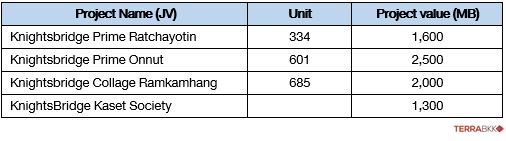
All Inspire Development has partnered with Hoosiers Holdings, initially developing 3 pilot projects valued at over 6 billion baht. The first joint project is The Excel Hideaway Sukhumvit 50, valued at over 2 billion baht, with a shareholding ratio of 51:49, allowing All Inspire to manage and strategize the entire project.

It is clear that the investment amounts from major Japanese real estate companies in Thailand are substantial, with joint projects between each pair of companies totaling no less than 10 billion baht. TerraBKK has analyzed various factors that have led Japanese real estate companies to favor investing in Thailand, identifying three key points.
First Point The growth of new Thai real estate developers
Many new Thai real estate developers, such as Origin Property and All Inspire Development, have experienced significant growth, having been established for 8 and 4 years respectively, with impressive annual performance, especially in terms of revenue. They have also launched new projects that have received positive responses from the domestic market, aligning with the objectives of Japanese real estate developers seeking to expand their investment market by finding partners with growth potential.
Moreover, Thai developers are in need of funding sources to help their businesses grow rapidly. Joint ventures thus benefit both parties, and Thai developers gain knowledge in optimizing residential space management, an area in which Japanese companies excel.
Second Point The declining growth trend of the Japanese real estate market
The Japanese real estate market has seen a decreasing growth rate over the past decade due to high competition in the industry, resulting in fewer new market areas for companies to expand their businesses. For instance, housing prices in central Tokyo are nearly 300,000 baht per square meter. Another significant factor is the declining population trend in Japan, which has resulted in negative population growth since 2010 and continues to decline. This is likely due to the modern Japanese youth's preference for childless families, making foreign market investments an attractive option for Japanese real estate companies.

Third Point The Thai real estate market still has growth potential
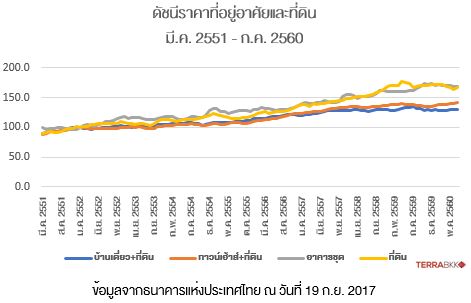
Although the Thai real estate market has slowed down in the past 2-3 years due to political events and global economic impacts, certain types of housing, such as condominiums, remain popular, as evidenced by news of project launches with overwhelming bookings. Additionally, positive factors continue to support the real estate market, including government infrastructure policies, measures to reduce transfer fees, mortgage fees, and low-interest rates, making the Thai real estate market still attractive for foreign investors. Analyzing the land and housing price index shows that Thailand's index has consistently grown, remaining relatively stable since early 2016. Furthermore, commercial bank real estate loans have only seen a decline during the 1997 Asian financial crisis, after which they have continuously grown. This data indicates the ongoing growth potential of the Thai real estate sector, provided there are sufficient supportive factors.

What Thai real estate companies need is capital to expand their businesses, while Japanese real estate companies seek market areas with growth potential for investment expansion. When both parties can meet each other's investment objectives, it explains why joint ventures with foreign partners have become popular among Thai real estate companies in this era.