Will Bangkok be submerged in a few years, or should we adapt to living with water?
The rain falling at the end of the season is starting to create some signals that make the people of Bangkok feel anxious. Most Bangkok residents still remember the great flood of 2011. Recently, this concern was echoed by the Governor of Bangkok, who stated that from September 4-8, the water from upstream and the sea will rise, and warned nearly 500 households to prepare to evacuate their belongings. Is history about to repeat itself like it did six years ago?
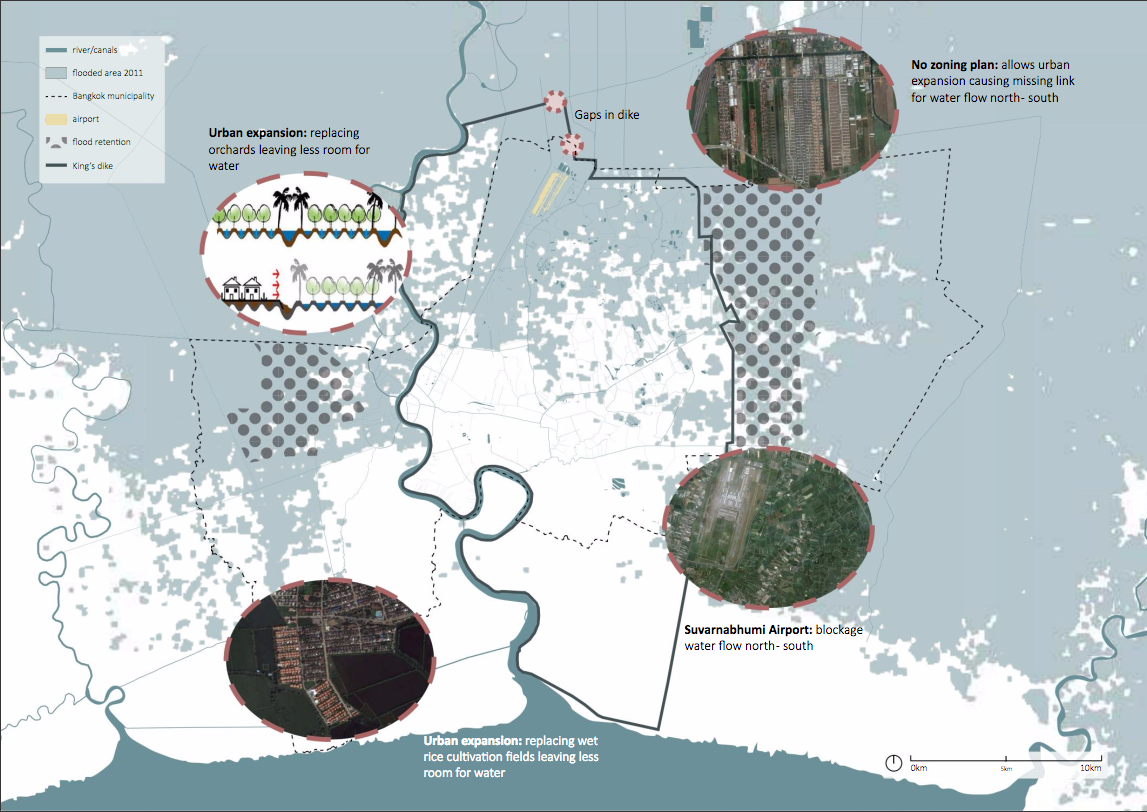
The reason Bangkok is always at risk of flooding is due to its geographical location in a low-lying river delta, combined with the problem of land subsidence caused by excessive groundwater extraction, leading to a shortage of underground water and unstable soil layers. Did you know that Bangkok subsides by an average of over 10 cm per year? Meanwhile, sea levels seem to be rising every year, especially since 1967, at a rate of 4.1 mm per year.
Oh dear! How should we prepare for this? Should we really evacuate as the governor suggested?
Let's look at which areas are experiencing land subsidence.
In fact, government agencies have never neglected this issue. On the contrary, they have conducted surveys, studies, and sought ways to prevent it. The Department of Groundwater Resources has surveyed areas facing groundwater shortages (which indicates that underground water is critically low, leading to land subsidence) by compiling data from 1981 to 2008, a total of 30 years. They used benchmark stations for measuring land subsidence, and the results showed that the area with the highest accumulated subsidence is Bang Kapi district, which has subsided by over 1.2 meters. The area with the least subsidence is Nonthaburi province, with an average subsidence rate of no more than 1 cm per year (data from the Military Mapping Department, Royal Thai Army).
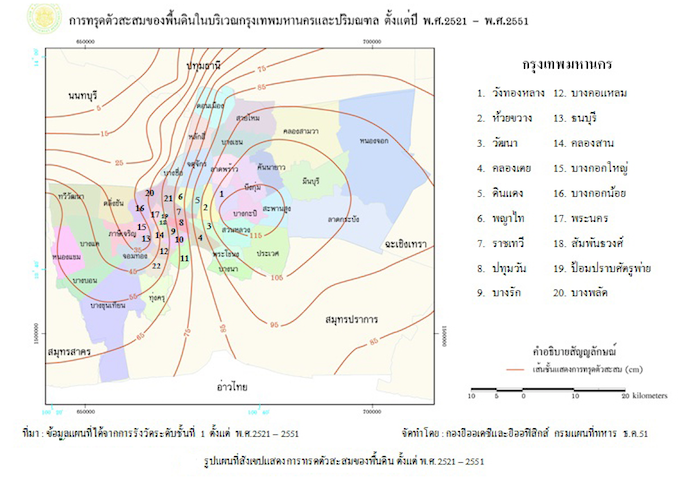
Additionally, the Department of Groundwater Resources has summarized land subsidence data by area, including the Ratchathewi district, which saw a subsidence rate of 1.3 cm per year in 2006, down from 1981-1988. The area around Ramkhamhaeng University has a subsidence rate of 1.3 cm per year, and they have identified critical areas for groundwater and land subsidence, categorized into three levels: Level 1 has subsidence greater than 3 cm per year and groundwater levels dropping more than 3 meters per year; Level 2 has subsidence of 1-3 cm per year and groundwater levels dropping between 2-3 meters per year; and Level 3 has subsidence of less than 1 cm per year and groundwater levels dropping less than 2 meters per year. 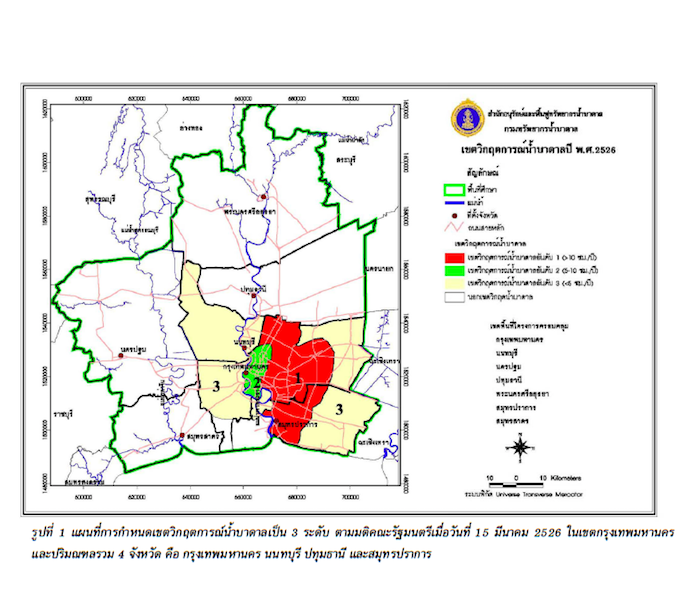
Should people stay away from water or learn to live with it?
Given the issues of land subsidence and declining groundwater, we must accept that there is no way to stop the land from sinking in Bangkok, and the ground level will continue to drop every year, increasing the likelihood of flooding. But have we forgotten that historically, the lifestyle of Bangkok residents during the Rattanakosin era was even referred to by foreigners as the Venice of the East?
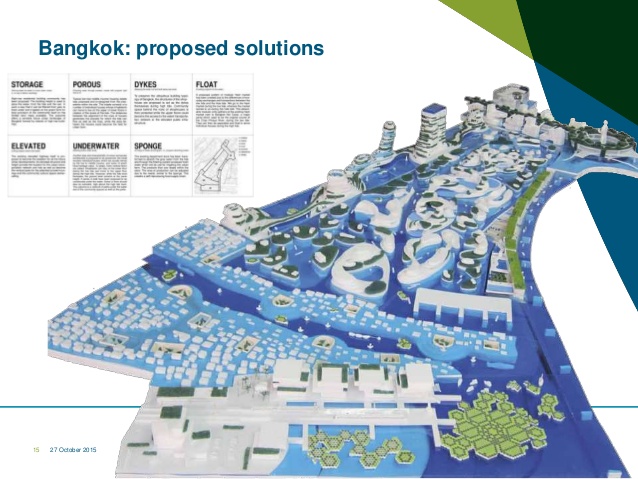
In urban development and planning, there has been a concept to design cities to cope with unavoidable natural situations. This concept is known as Resilient City or Urban Resilience, which means integrating factors from nature, economy, society, quality of life, and urban management into city planning and design.
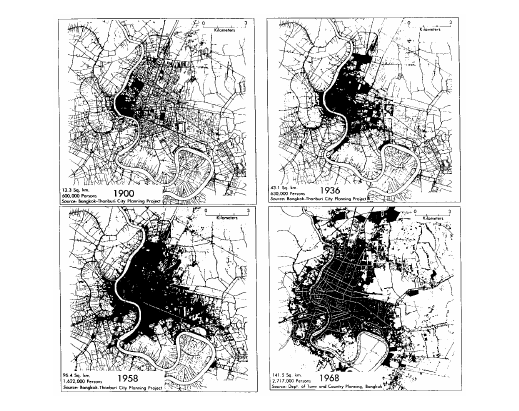
Traditionally, Thai people settled in harmony with nature and had lifestyles closely tied to water. However, since around 1957, there has been rapid development with the introduction of tram systems, railways, canals, and roads in Bangkok, trying to keep pace with the industrial revolution in the West. This rapid urban expansion led to overcrowded communities, unplanned urban growth, disconnected road networks, and large land ownership patterns (Super Blocks) that hindered development. All of this expanded significantly around 1968, while the first urban planning law was introduced 35 years later, with the first use of the Town Planning Act in 1992, which had limited provisions mainly for zoning without clear urban planning measures for control.
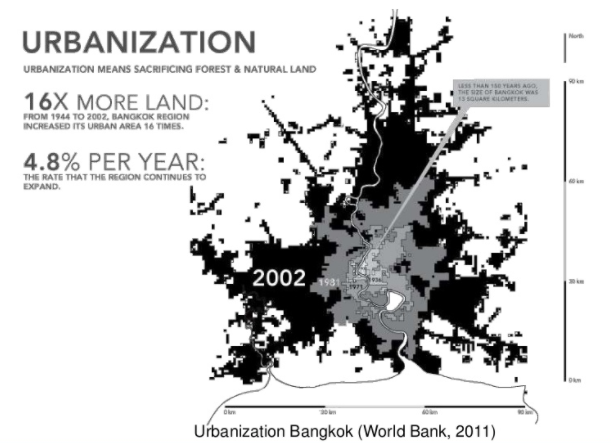
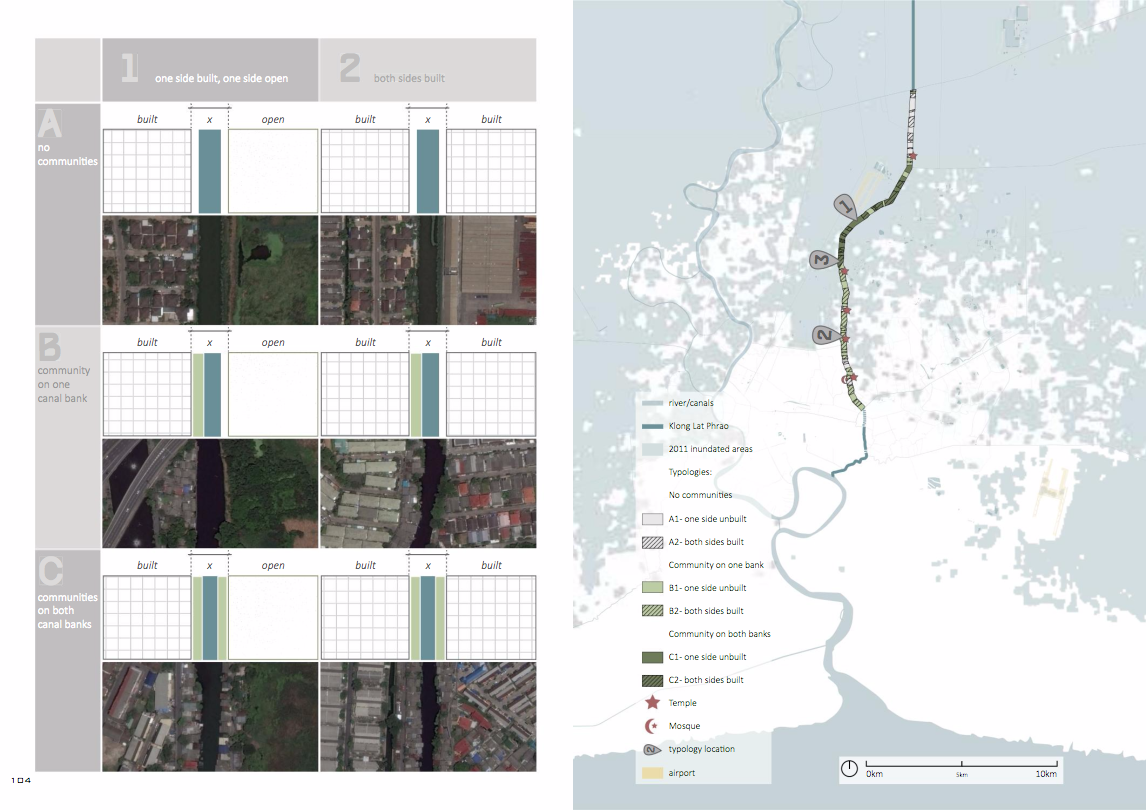
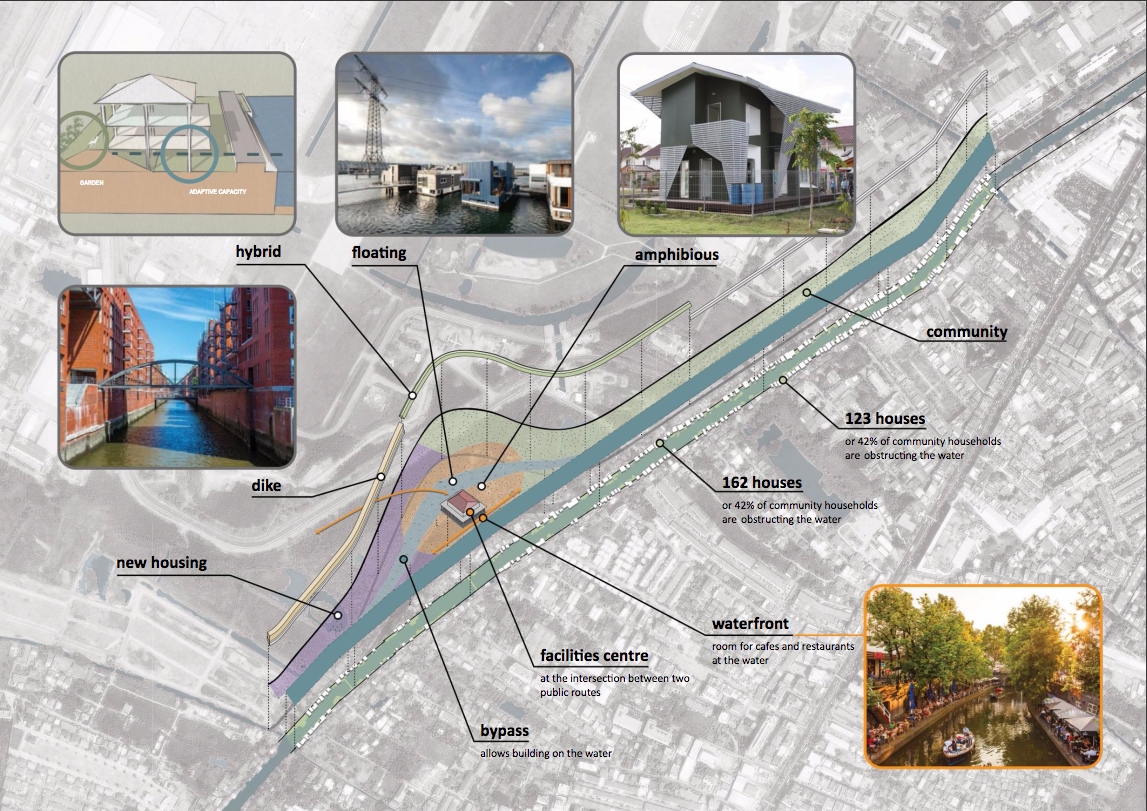
In 2015, a study was conducted by a group of students from the Faculty of Architecture at Silpakorn University and architecture students from the Netherlands, organizing a workshop on the concept of designing Bangkok. Their project was titled Bangkok Adaptive City 2045, which outlined a vision and ideas for urban development over the next 30 years (28 years from now). This project aimed to integrate the lifestyle of Bangkok residents connected to water with modern construction and adapt water management strategies, enhancing the canal system for better drainage. - เทอร์ร่า บีเคเค
For more information, visit
- https://www.facebook.com/BkkAdaptiveCity2045Workshop
- https://www.slideshare.net/PietFilet/floodcop-oct-2015-nanco-dolman-towards-water-resilient-cities
- https://issuu.com/nirulr/docs/p5_report_-_v5_june_30th_digital_lq
Article by: TerraBKK Investment Tips
TerraBKK Find good, valuable, affordable homes