Opening Business Doors to the Digital Era: Exploring Opportunities in ASEAN
Opening Business Doors to the Digital Era: Exploring Opportunities in ASEAN
** You can download the English version of the document at the end of this article
Summary of knowledge from the course “Asean Treasures: Opportunities & Challenges (ATOC)”
The dynamics of the world are changing every moment, and the majority of the global population is becoming aware and trying to adapt to these changes. On a global level, countries in various regions are joining hands to build economic relationships. For the 10 countries in Southeast Asia, they have made a joint agreement known as ASEAN or Association of Southeast Asian Nations.

The course “Asean Treasures: Opportunities & Challenges (ATOC)” focuses on equipping participants with knowledge and understanding, enabling them to adapt to the trends of the ASEAN market. This aims to strengthen both existing and new business groups to compete intelligently and effectively in the ASEAN+3 market. The content emphasizes international business management processes within ASEAN, including geography and trade history in the region, market data and values, and regulations of each country. Additionally, the course creates opportunities for knowledge and experience exchange between participants and esteemed speakers, as well as building a network that leads to collaboration among participants to strengthen economic resilience. For more details, visit http://www.a-toc.com/th/
Recently, on August 24, 2017, Mr. Wu Hua Chun , a Gold Supplier representative of Alibaba.com in Thailand and General Manager of Sawatdee Group delivered a lecture on Doing Business in ASEAN Continent / China and introduced an exclusive study trip to Alibaba Campus, the first of its kind in Thailand, with interesting content as follows:

The Transformation of the Old and the Emergence of the New (Trend)
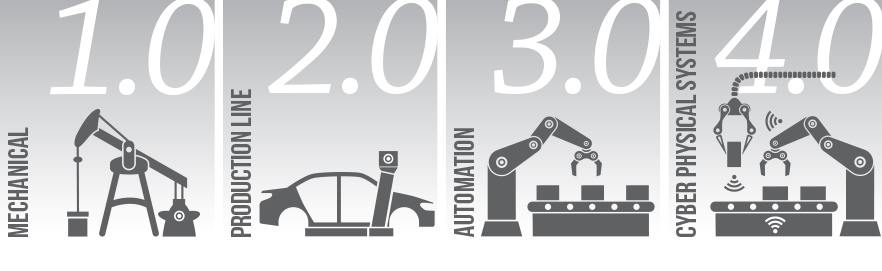
Currently, the world is entering the 4.0 era as stated in the government's economic policy. Historically, the first era of global transformation occurred between 1750-1850, known as the Industrial Revolution (1.0) or Steam Age, which marked a complete transformation of production capacity in the world by utilizing heat energy from coal combined with machinery. Later, in the Industrial Revolution (2.0) or Electric Machine Age, numerous industrial machines were developed, replacing steam with electricity.
Industrial Revolution (3.0) or Computer Age is characterized by production capacity operating through electronic circuits, leading to automation that enhances flexibility and precision in work. Following this, we have arrived at the Industrial Revolution 4.0 — the era of the Internet, Big Data, and Artificial Intelligence (AI). However, it cannot be fully claimed that we have completely entered the 4.0 era, as AI still does not play a clearly defined role. Nevertheless, experts and scholars agree that in about 10 years, AI will certainly replace many aspects of human work.
The Challenges Accompanying Change (Challenge)
Each era of industrial revolution has revealed the emergence of two forms of power: Power of Ownership (Hold) and Power of Use (Use). Wealthy and powerful nations possess at least one of these powers. For instance, the United Arab Emirates has the power of ownership over oil, making it immensely wealthy to this day.
Mr. Wu Hua Chun also mentioned that individuals with both powers of ownership and use can influence the global level. He cited Masayoshi Son, the owner of Softbank, a major investor in many global internet businesses, including Grab and Yahoo, and a major shareholder of Alibaba. Notably, Softbank's current investment in Oneweb aims to provide internet coverage worldwide through a single network, along with a robotics and AI development company named iFlytek, which has developed AI for language translation for major companies like SHARP. All of this represents the challenges and adaptations necessary to keep pace with the changes in the business world during the Digital Age.

Adapting to the Global Flow (Response)
Mr. Wu Hua Chun stated that the United States, Israel, and China are the countries that utilize digital platforms or various internet services the most in the world. Currently, there are over 12,000 startups in China, ranking among the top in the world. There is also a shift in the work values of university students who increasingly aspire to establish their own startups, suggesting that the nature of future jobs may change in line with these values.
Case Study: Alibaba as a Business Tool in the 4.0 Era (Tool)
Every business has gaps, and Alibaba, the largest e-commerce company in China and one of the top globally, fills these business gaps by creating a comprehensive business structure. Alibaba's robust growth is attributed to its extensive business ecosystem, which includes Taobao.com: Online shopping website / Tmall: Retail platform / Juhuasuan.com: Group buying platform / 1688.com: Wholesale platform / Alimama.com: Online marketing service / Aliyun.com: Calculation platform and AliExpress: Delivery service. This comprehensive service across all dimensions of online shopping has made Alibaba widely popular in China, significantly boosting the economy from households to the country's GDP, creating jobs and substantial income for China.

The Near Future (Future)
If we compare energy to the tool that has driven the world from the past to the present, the energy of this era is Big Data or the overlay of vast information. Developers are striving to enable AI to store this Big Data. With sufficient data, combined with analysis and processing through computer systems, AI will achieve unimaginable efficiency. Those who can fully possess and utilize this Big Data may hold the key to business success in the future. Once Big Data is available, the next crucial aspect is ensuring security and preservation, leading to the potential emergence of Big Data Security businesses.
Beyond Big Data, there are predictions of the emergence of new resources (Future Resource) that will be necessary, suggesting that the economic structure may no longer follow traditional models, including methods of conducting business.
In addition to the five fundamental issues of change in the 4.0 industrial revolution, ATOC's first cohort will also have the opportunity to visit Alibaba in China to exchange knowledge and adapt for businesses in the Digital Age.
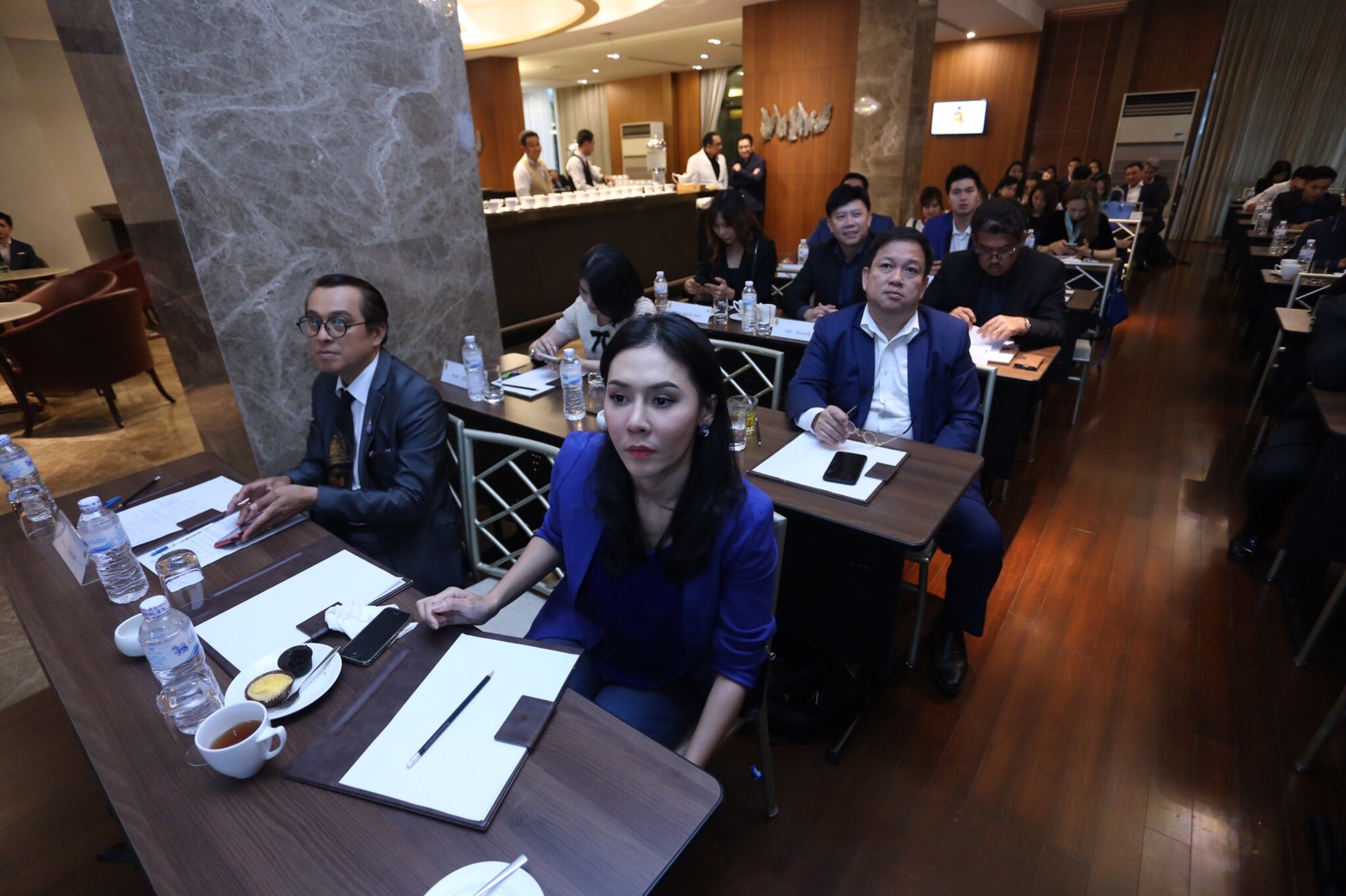

Information from the lecture titled “Business Opportunities in ASEAN: Doing Business in ASEAN Continent / China” by Mr. WU, part of the course “Asean Treasures: Opportunities & Challenges (ATOC)” on August 24, 2017.
The course “Asean Treasures: Opportunities & Challenges (ATOC)” is led by the course advisory committee chaired by Prof. Dr. Surakiat Sathirathai and includes committee members such as Dr. Thepprasit Prawahanavin, Assoc. Prof. Dr. Sangsit Piriyarangsan, Mr. Niruth Maneepan, Mr. Kiattichai Pongpanit, Dr. Suriyasil Katasil, Dr. Nop Manolehan, and Assoc. Prof. Dr. Somchai Pakapasvivat. The course aims to equip participants with knowledge and understanding, enabling them to adapt to the trends of the ASEAN market.
Article by: TerraBKK Investment Tips
TerraBKK: Find good, valuable, and affordable homes