
What Will the World Population Look Like in 50 Years?
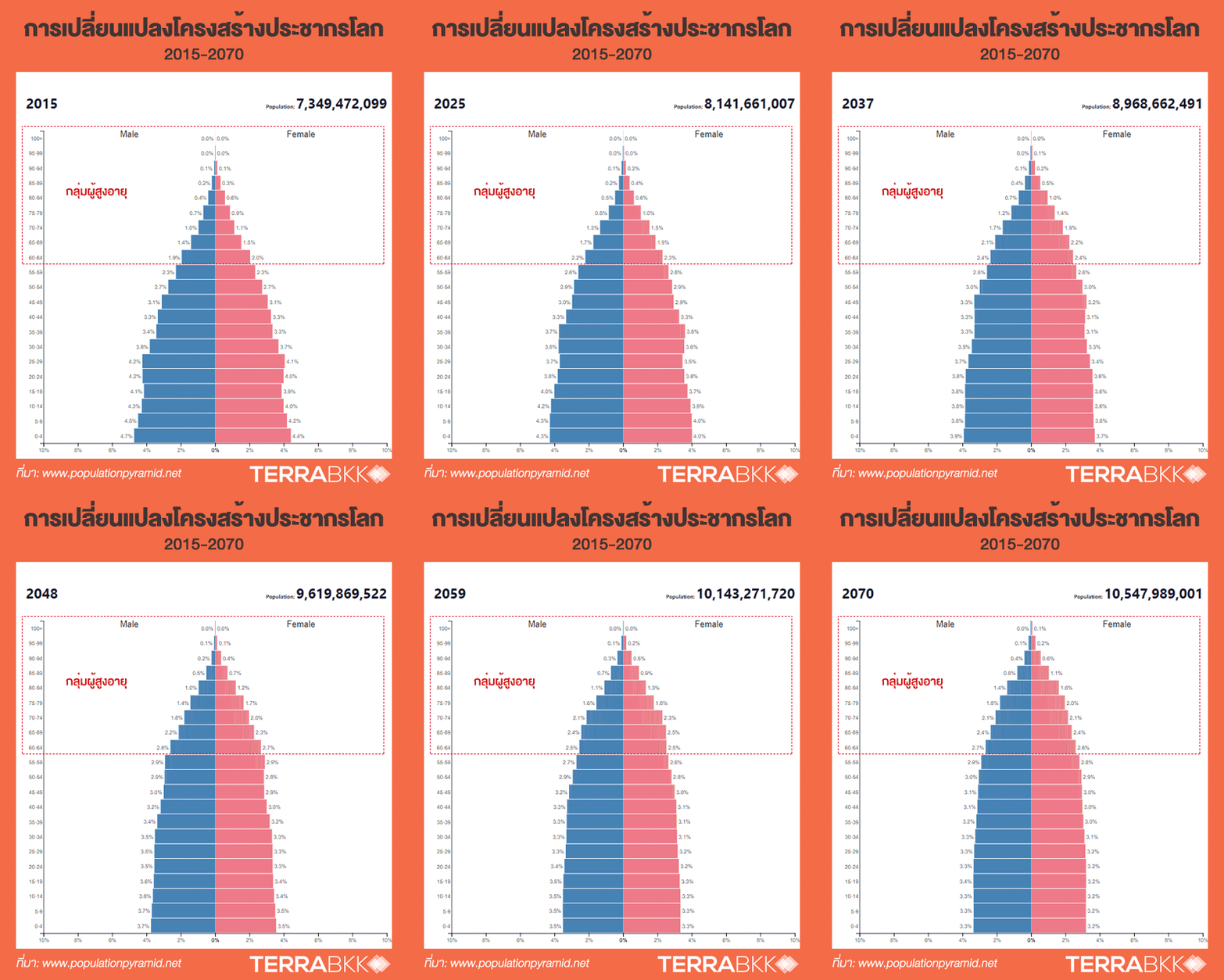
Many people have probably seen movies about world-ending viruses or catastrophic events that cause humanity to dwindle by more than half! However, these scenarios are just fiction. In reality, the human population has been growing rapidly. Currently, the world population is approximately 7.5 billion people, and if... no apocalyptic events occur like in the movies, in about 50 years, or by 2070, the world population will reach 10.5 billion people!! Even more shocking, the demographic structure of the world will transform, with an increasing number of elderly people (which includes everyone reading this article). The working-age population will decrease, and by 2070, the proportion of elderly people will account for 24% of the total world population!!
China Will No Longer Be the Most Populous Country
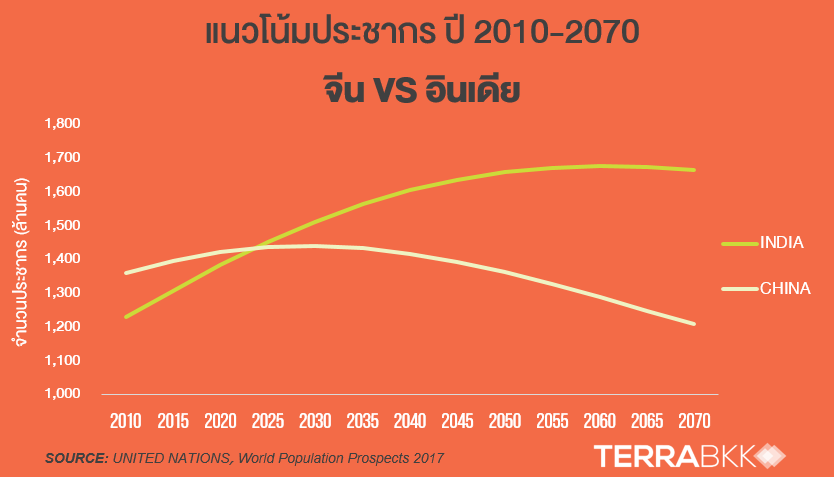
When discussing the country with the largest population in the world, one cannot overlook the giant “China”, which had a population of 1.388 billion in 2017. However, by 2022, India will surpass China in population. While China's population growth continues to decline, India's population growth is on the rise. In fact, these two countries account for nearly half of the world's population! Furthermore, China has policies aimed at reducing its population, which means that in the future, India's population density could reach 533 people per square kilometer.
Thailand Will Fully Enter an Aging Society Alongside a Declining Workforce
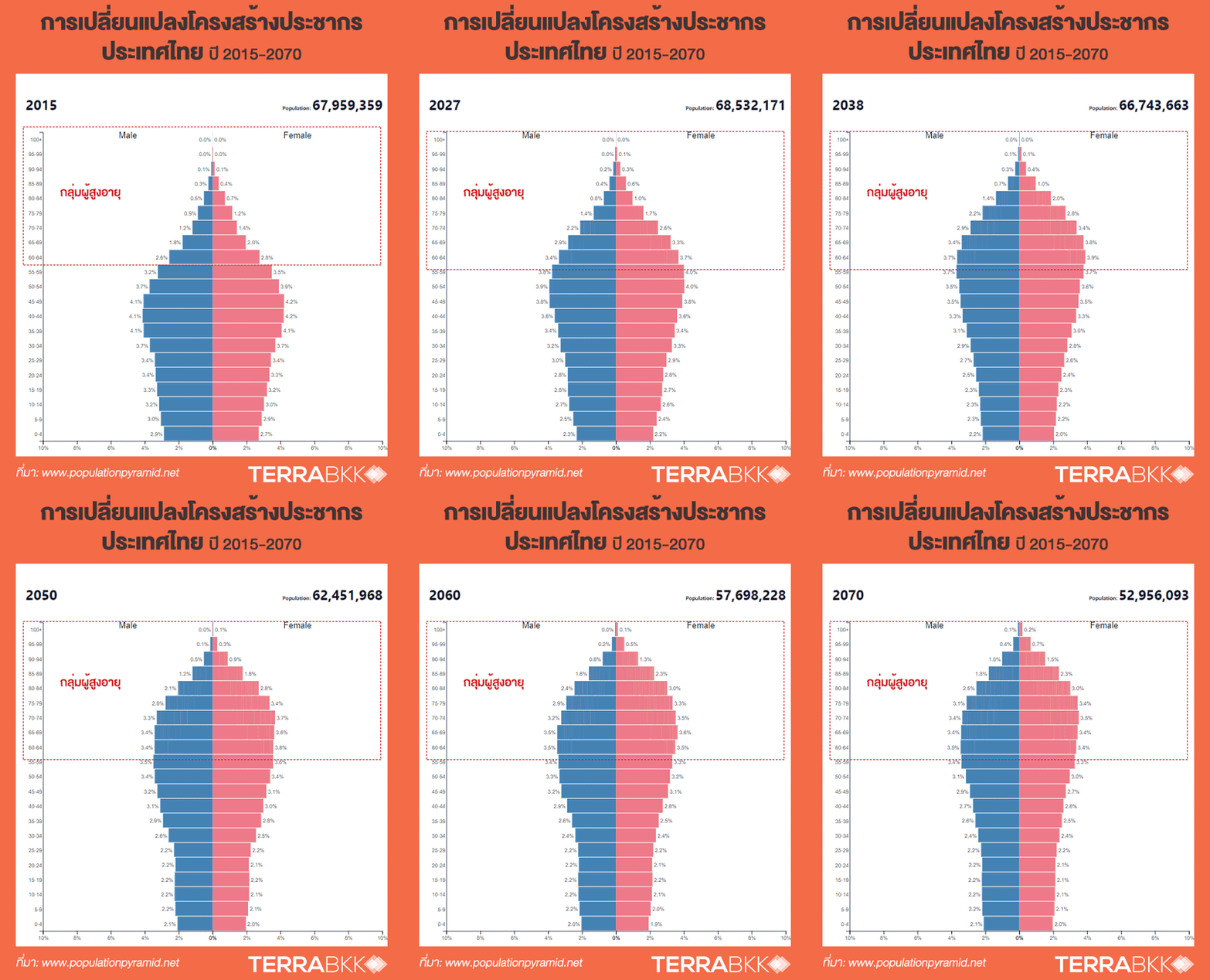
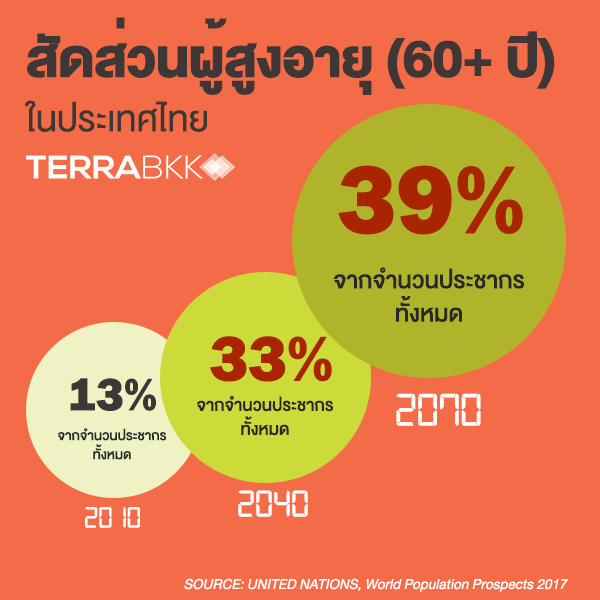
Although a declining population may prevent resource competition, the decrease primarily affects the working-age population, which is crucial for driving the country's economy. The increasing proportion of elderly people indicates that Thailand will face a reduced workforce in the future. Is it possible that we will utilize technology more effectively? By integrating technology or AI into the economy, the issue of “missing labor” may have little impact on Thailand's economy.
Is Human Resource Really the Most Important?
While it is true that human resources are important, it depends on the factor of how effective those human resources are. We must consider how well the country promotes basic factors such as education, housing, and whether essential resources for living are sufficient. For example, developed countries that lead in economic and technological advancements have low population growth rates, with a tendency to decline. Conversely, countries experiencing rapid population growth are often poorer or developing nations. The newborn population may not contribute positively to the country and may instead accelerate the depletion of resources. This illustrates that whether the demographic shift is beneficial or detrimental depends on the country's foundational conditions.
The World Economic Forum (WEF) has predicted that “5 million jobs will disappear by 2020”. Humanity should be cautious, as these positions will be replaced by AI. Many are concerned about the rise of AI, but the transition will not be sudden. Most business owners today are Baby Boomers, who tend to manage in traditional ways. Replacing humans entirely with technology is not an easy task. Therefore, TerraBKK Research believes that AI taking over human jobs can be beneficial because AI will primarily replace the missing working-age individuals. For instance, a task that once required five people may only need one or two in the future, with the rest being handled by AI, which may even perform more accurately than humans.
Ultimately, it must be acknowledged that the demographic changes in the next 50 years are significant, with a declining workforce and an increasing elderly population. What we can do now is prepare for what will happen in the next 40-50 years. It is true that many of us reading this article may not witness the world in 50 years, but remember that it is the same world that your descendants will live in - TERRABKK.
Article by: TerraBKK Knowledge Repository
TerraBkk: Find quality homes at affordable prices