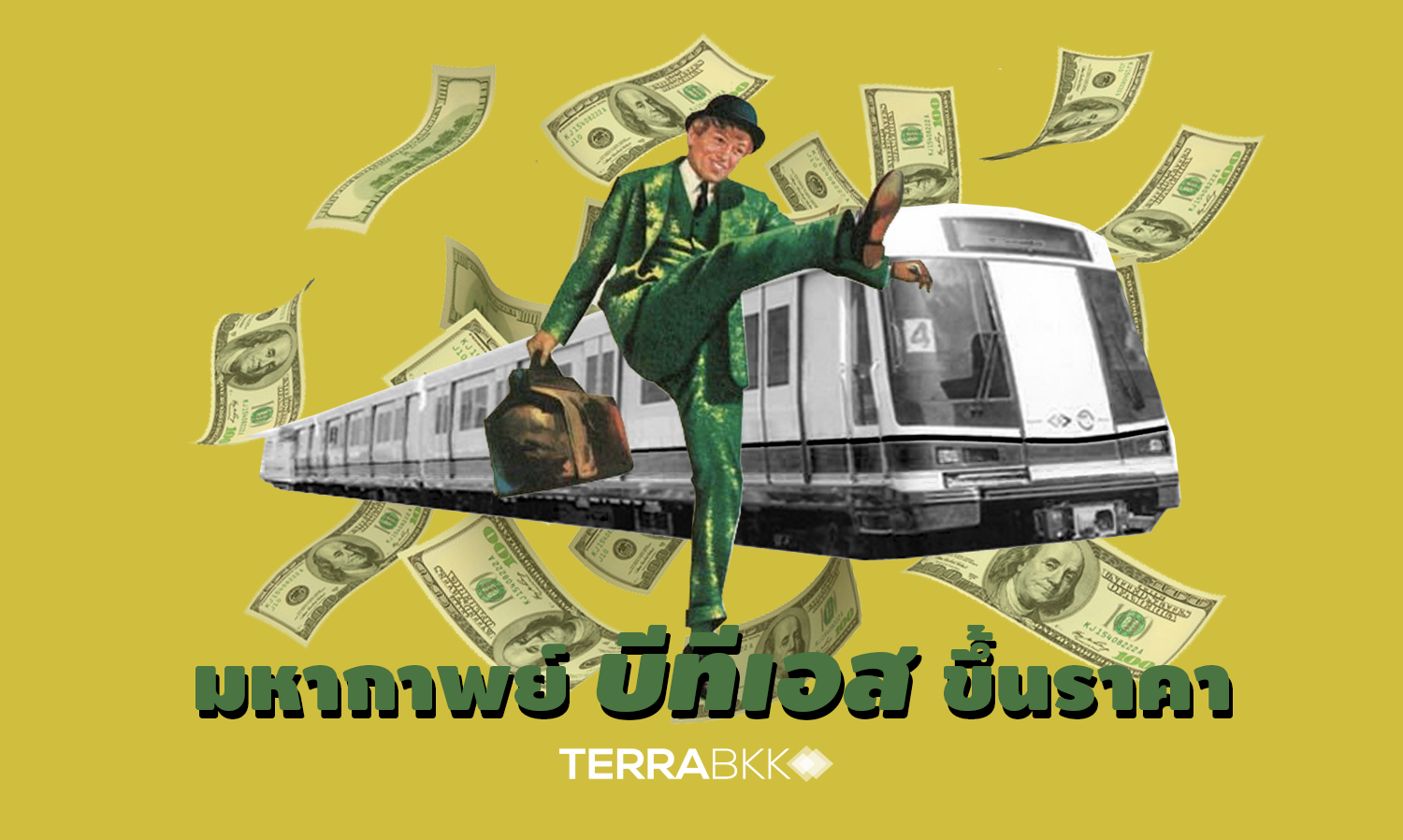
The Epic Saga of BTS Fare Increase
Bangkok residents have been enjoying the electric train system for 18 <\/em><\/strong>years.<\/em><\/strong><\/span> The service first launched in 1999, offering two lines: Sukhumvit Line from Mo Chit to On Nut<\/strong><\/span> and Silom Line from National Stadium to Taksin Bridge.<\/strong><\/span> Over the years, extensions have been added according to the master plan, with fare adjustments occurring three times since the contract allows for fare increases every 18 months or 1.5 years. <\/p>
The latest fare adjustment has set prices between 16-44 baht for the original stations, excluding the extensions. This has caused many Bangkok residents to lament, as daily travel costs can reach hundreds of baht. Let's take a look back at how much the BTS fare has increased this time and whether it aligns with the cost of living for Thai people.<\/p>
Previously on this topic<\/strong><\/span><\/p>
The Bangkok Mass Transit System Company Limited<\/strong><\/span>, originally named Thanayong Public Company Limited<\/strong><\/span>, was registered in 1968 to engage in real estate business. It was granted a concession to operate the BTS system with Bangkok Metropolitan Administration (BMA) in 1992, adopting the English name Bangkok Mass Transit System Corporation Ltd (BTSC)<\/strong><\/span>. The BTS first opened its doors in 1999, with fares ranging from 10-40 baht per trip. After 8 years of operation, the first fare increase occurred in 2007, raising prices from 10-40 baht to 15-40 baht per trip. Two years later, the Silom Line extension from Taksin Bridge to Wongwian Yai was opened, maintaining the old fare for non-extension stations.<\/p>
In 2011, further extensions were opened for the Silom Line from Wongwian Yai to Bang Wa and for the Sukhumvit Line from On Nut to Bearing, with fares based on distance. The second fare increase occurred in 2013, the first in four years, adjusting from 15-40 baht to 15-42 baht per trip.<\/p>
Subsequently, in 2014, the BMA approved a 25% increase in the maximum authorized fare to 18.79-56.36 baht. Most recently, on October 1, 2017, BTS fares were raised again after four years, from 15-42 baht to 16-44 baht per trip.<\/p>
Number of BTS Users<\/strong><\/p>
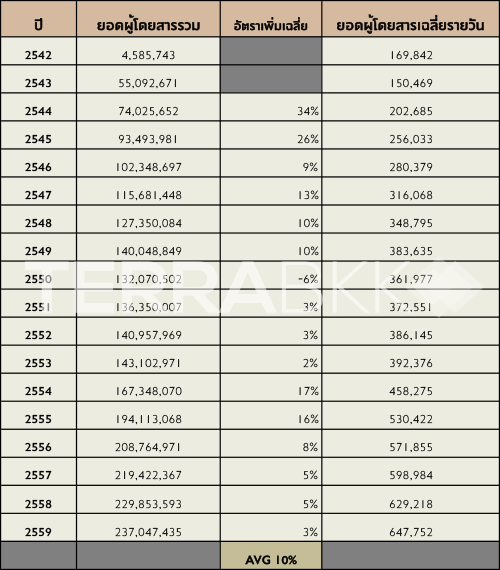
The BTS first opened on December 5, 1999, with approximately 4.5 million users by the end of that year, averaging 160,000 users per day. In the following years, ridership continued to grow by more than 25% until 2006, when the growth rate dropped to less than 15% annually, and a noticeable decline occurred in 2007 with a -6% change.<\/p>
However, the average daily ridership has increased significantly, reaching about 640,000 users in 2016 for both the Silom and Sukhumvit lines, which has considerably reduced the number of private vehicles on the road.<\/p>
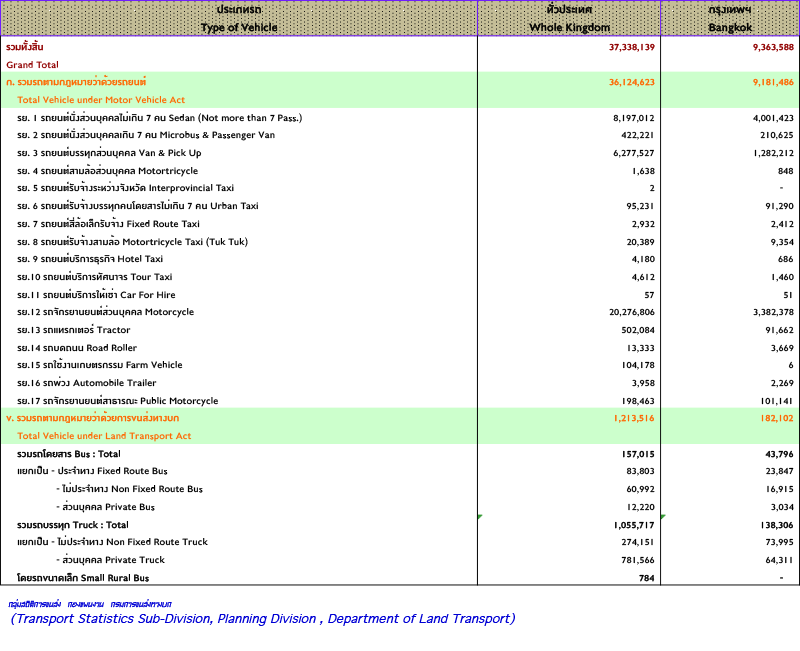
Does the daily ridership of over 640,000 truly alleviate traffic congestion? This question remains debatable, as data shows a consistent increase in registered vehicles each year. In 2016, there were over 9 million registered vehicles in Bangkok.<\/strong><\/span> Consider where these 9 million vehicles are if not on the roads. Nevertheless, the number of registered vehicles has decreased significantly from 2015, when there were 14 million registered vehicles in Bangkok.<\/p>
<\/p>
Urban Structure as a Barrier to Public Transport Access<\/strong><\/span><\/p>
With the BTS fare increase averaging about 1-3 baht per station, for daily commuters making multiple trips, the financial burden can be considerable. In Thailand, where the average household income is 26,915 baht per month (2015<\/strong>) and average monthly expenses are 21,144 baht (2016<\/strong>), with an average debt of 156,770 baht per household (2015<\/strong>), dreaming of becoming wealthy seems unattainable, making it difficult to secure a comfortable retirement.<\/p>
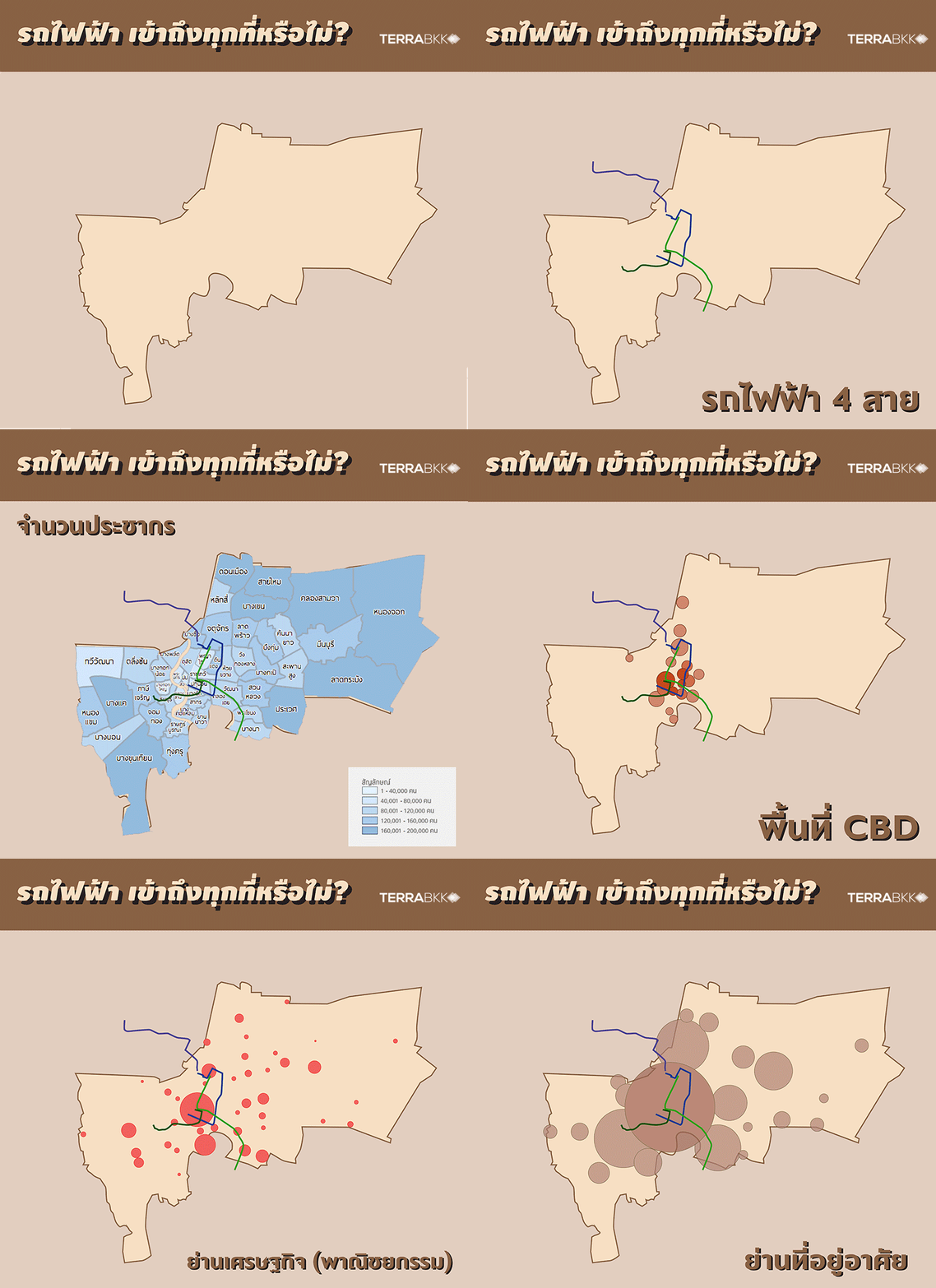
Furthermore, TerraBKK<\/strong><\/span> believes that a significant barrier to developing public transport and encouraging a shift from private vehicle use to public transport is akin to pushing a boulder up Everest in Bangkok. The urban structure poses major challenges to development, with conflicting government planning and private sector land use competing for space, making it difficult for the population to access public transport.<\/p>
From the population in each district of Bangkok, it is evident that districts with populations between 160,001-200,000 are suburban areas,<\/strong><\/span> while inner-city districts have medium to low populations (1-120,000). Public transport primarily serves the urban areas, leaving residents in the outskirts with little access. Given the density of job centers, educational institutions, and CBD areas concentrated in the inner city, the travel patterns of the population—whether commuting for work, study, or errands—are all directed towards the inner city. Residents in the outskirts who cannot access public transport are forced to rely on private vehicles for greater convenience (we won't discuss other public transport options like buses, as we know they are not very popular).<\/p>
Now, let's look at urban planning, as it is a crucial determinant of a city's role. The positioning of economic zones or commercial areas in Bangkok, while centered in the inner city accessible by the BTS, leaves other economic areas scattered and primarily reliant on private vehicles or buses for transportation.<\/p>
Thus, the obstacles to developing and promoting public transport by the government are persistent issues. This does not even include the road network planning that complicates access and connectivity, superblocks that hinder optimal land use.<\/strong><\/span> We will have to wait and see if, once all lines are completed and connected throughout Bangkok, these issues will be resolved or if new problems will arise in their place. - เทอร์ร่า บีเคเค<\/p>
Article by: TerraBKK Knowledge Base<\/strong><\/span><\/p>
TerraBKK: Find good, valuable, affordable homes<\/strong><\/span> <\/p> 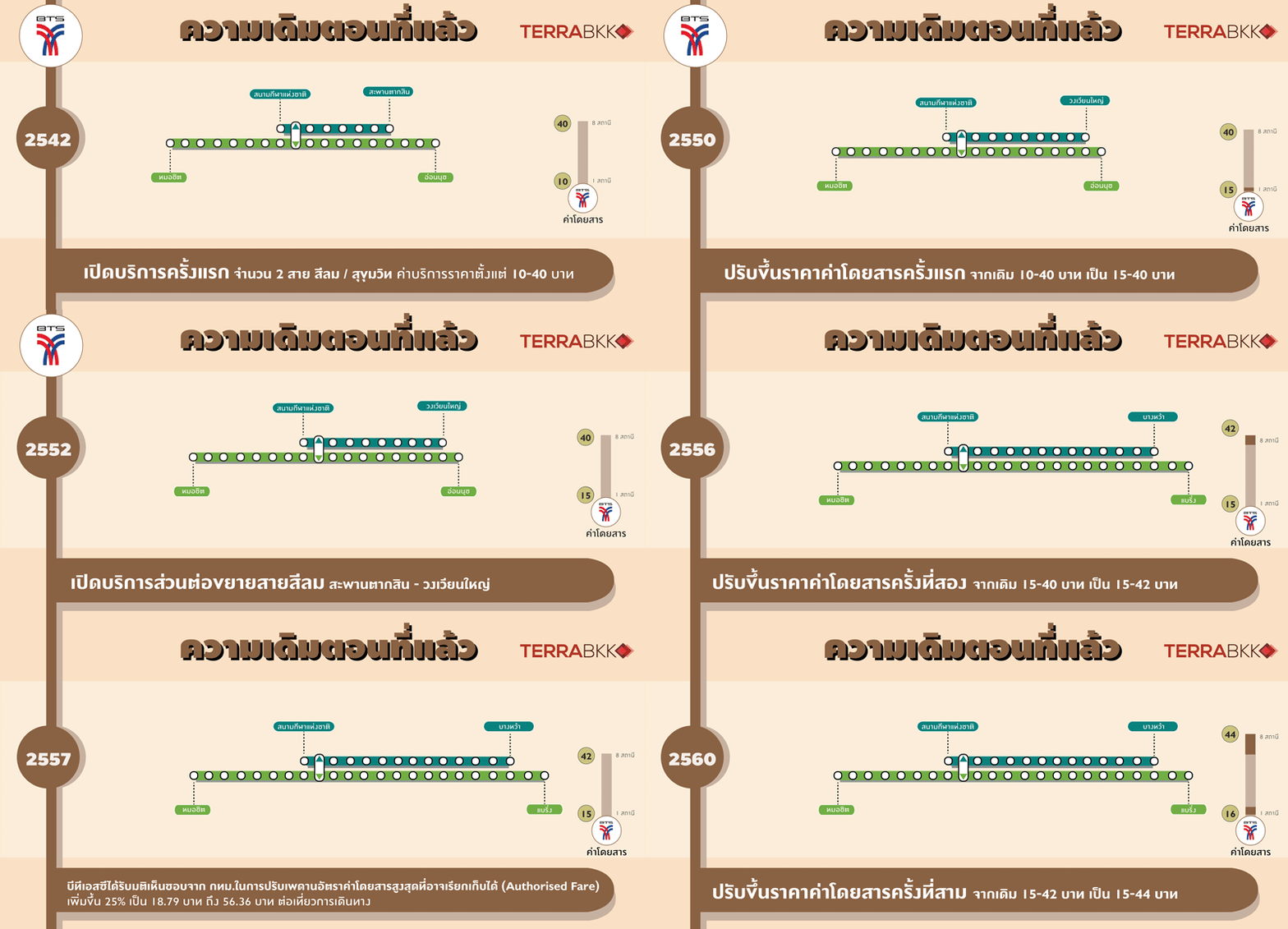 <\/p>
<\/p>
 <\/strong><\/p>
 <\/p>
<\/p>
 <\/p>
<\/p>
 <\/p>
<\/p>
<\/p>