Which City Should You Move To? Insights from the Thailand Development Plan 2600
Once again, TerraBKK Research is bringing up the topic of the transition of eras and times. The reason for this is that the trend of Urbanization or the transformation of urban areas is being discussed in many media outlets, as it is a Global Trend. Therefore, we cannot overlook it without mentioning it.
Urbanization is a term used by scholars to define the phenomenon of cities transforming from rural areas to urban centers, which occurs gradually over time and has been happening globally. Originally, Bangkok was known as a single-growth city, a metropolitan area that serves as the central hub for all aspects of the country, including infrastructure, business, job opportunities, education, and various developments. It is the only province in Thailand with a population exceeding 5,686,000 people. The province with the second-largest population after Bangkok (excluding surrounding provinces) is Nakhon Ratchasima, with a population of about 2,630,000. In contrast, the province with the smallest population is Ranong, with only about 189,000 people. When comparing these figures, it is evident that the population sizes across provinces in Thailand vary significantly, indicating that development is concentrated only in major provinces, leading to a majority of the population clustering in developed areas. 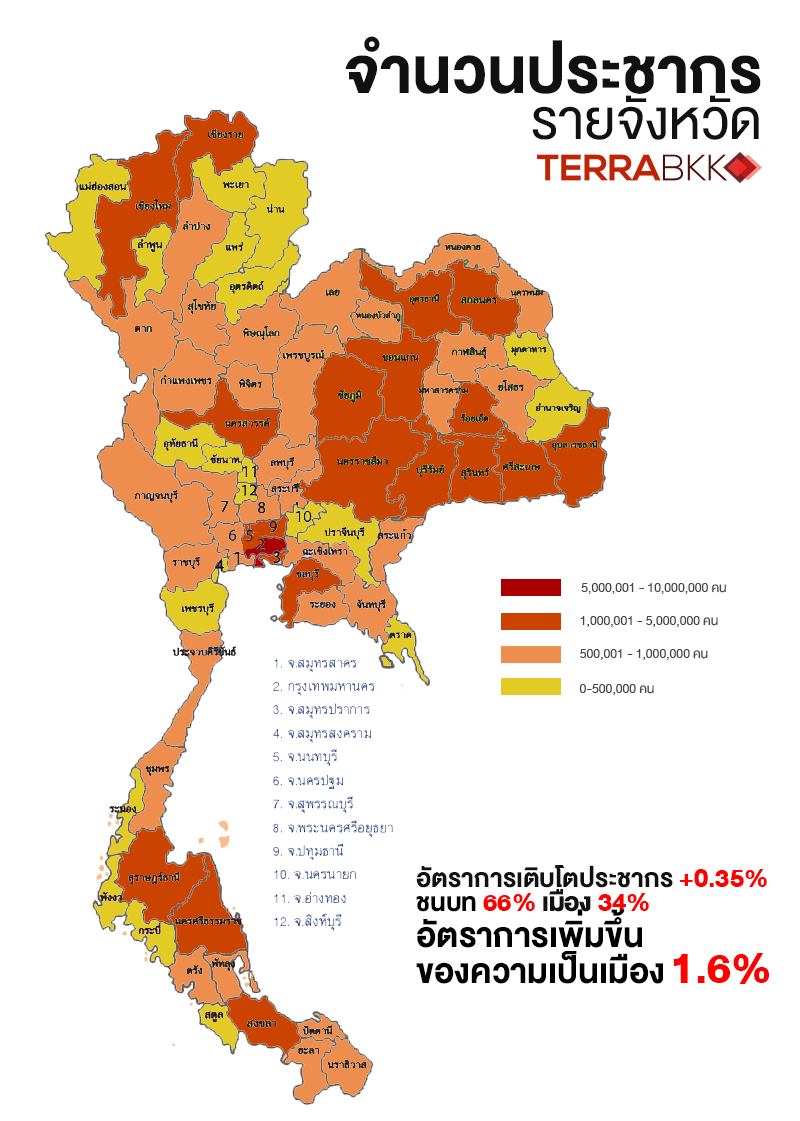
However, over the past 50-60 years, gradual changes have begun to occur in other provinces. If we use population size as a criterion for categorizing provinces, those with populations over 5 million, like Bangkok, are classified as large cities; those with populations between 1-5 million are considered regional hubs or provincial centers; cities with populations between 500,000 and 1 million are medium-sized cities; and those with populations under 500,000 are small cities.
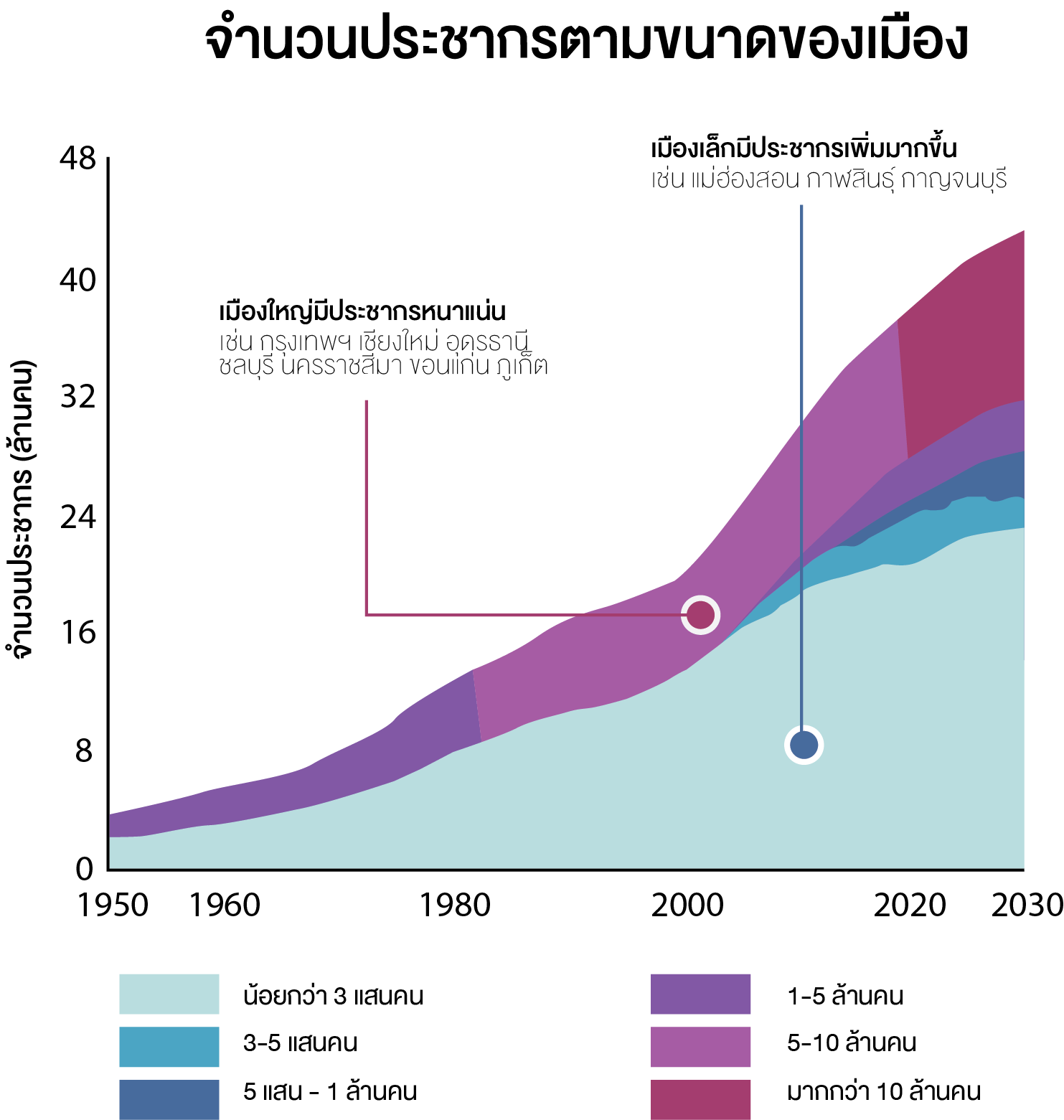
According to data from the National Statistical Office's population registry in 2016, there is still only one large city, which is Bangkok. However, the number of regional centers and medium-sized cities has significantly increased. There are only 21 provinces with populations under 500,000 out of a total of 77 provinces in Thailand, indicating that urban expansion due to population growth is becoming more pronounced. The population in rural areas has increased by 66%, while urban areas have seen a 34% increase, with an urbanization growth rate of 1.6%. This means that regional and medium-sized cities are experiencing population growth, while the single-growth city of Bangkok continues to grow steadily.
These observations are based on population data and statistical growth rates, and the trends may have some discrepancies. Now, let's explore additional possibilities from the Thailand Development Plan 2600, which was announced in 2012. The essence of this plan is to outline the positioning and direction of Thailand's development in the future, providing a rough framework. Let's see what the Thailand Development Plan 2600 has to say.
Overview of Urban and Rural Populations
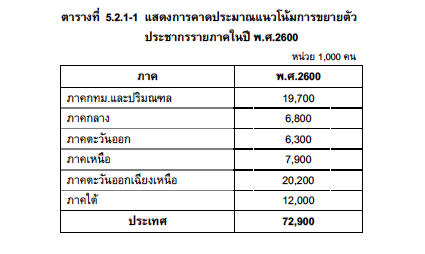
The population data from the development plan aligns with global trends. In 2002, the urban-to-rural population ratio was 30:70, but by 2600, it is expected to shift to a 50:50 ratio, indicating a steady influx of people into urban areas.
Which Provinces Are Prepared to Become “Cities”?
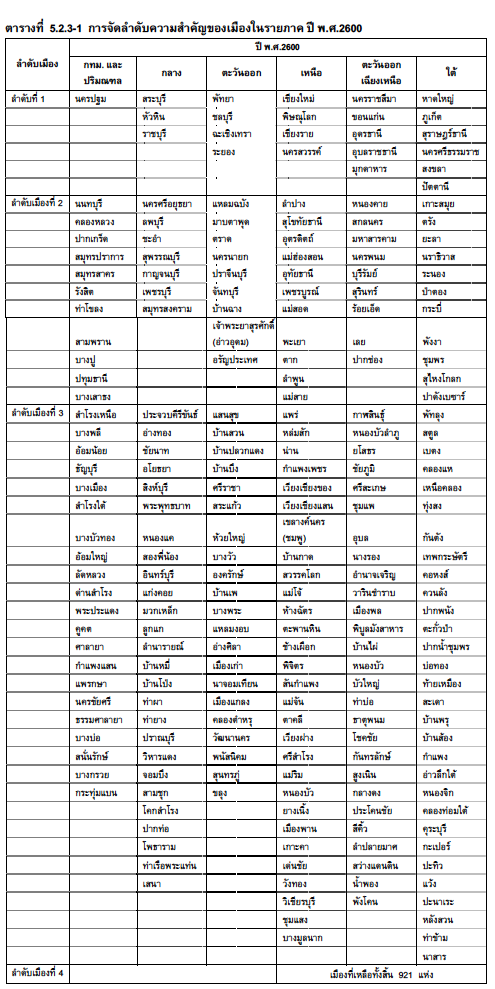
The Thailand Development Plan 2600 has organized cities and communities in a hierarchical system to accommodate the increasing population in urban areas. The hierarchy includes metropolitan cities and cities ranked 1-4, with each city playing specific roles, such as border cities, historical cities, tourist cities, industrial cities, and transportation hubs. This ranking prompts us to focus on cities ranked 1, which will certainly receive infrastructure development support in the future. These cities are not only categorized by province but also down to district and sub-district levels, allowing for predictions about the growth of various locations.
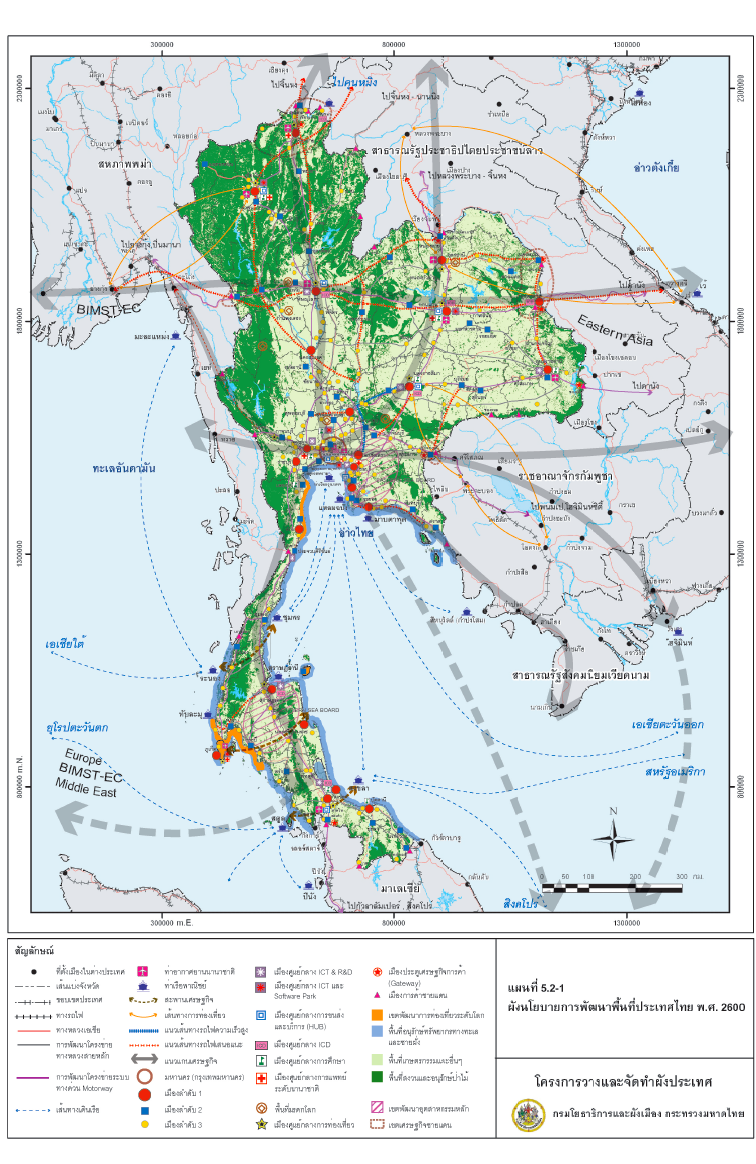
Finally, the overall picture of the Thailand Development Plan 2600 reveals interesting economic pathways that align with China's One Belt One Road initiative. The development routes center around Bangkok and extend to major cities in various regions, leading to opportunities for development along these routes. The first confirmed project is the Bangkok-Korat high-speed train, which falls within the eastern economic corridor as outlined in the Thailand Development Plan 2600. Additionally, the north-south economic corridor aligns with the route of the Bangkok-Chiang Mai high-speed train, suggesting that the current intensity of development is consistent with the direction set by the Thailand Development Plan 2600.
Article by: TerraBKK Knowledge Base
TerraBkk: Find quality homes at affordable prices