Millennials Satisfied with Mass Transit, Baby Boomers Still Attached to Driving
The movement towards infrastructure development in our country is now showing improvement, especially in the area of mass transit. Recently, we have seen news that Khon Kaen province is preparing to break ground for the development of an urban electric train project this December. It doesn't matter who is pushing the project; the development for the majority of people is certainly something to be pleased about. After all, Thailand only has Bangkok as the sole city with mass transit! It's quite disappointing to think about how one would travel if they had to move to work in another province without a personal vehicle.
What about countries where mass transit has been developed for a long time? The United States is a country where mass transit is accessible in many states. A study titled Who’s On Board: 2014 Mobility Attitude Survey? was conducted to survey attitudes towards using mass transit. The key finding of this survey revealed that the majority of mass transit users are young people living in cities with easy access to public transport. Importantly, these young individuals crave better mass transit options more than they desire free Wi-Fi available everywhere.
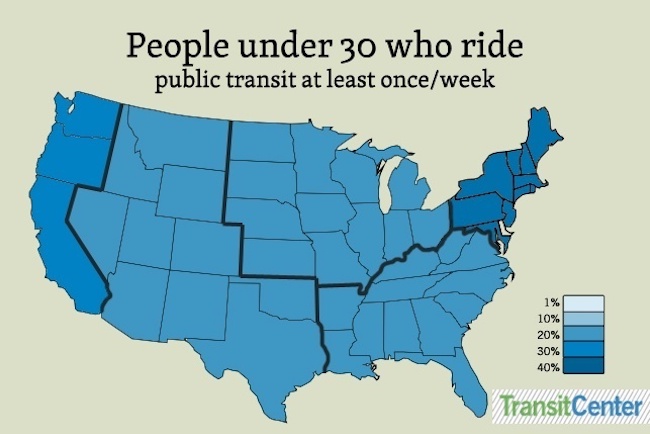
The survey covered 11,842 people across 46 districts, clearly showing that those under 30 have a positive attitude and are more likely to use public transport. Meanwhile, Baby Boomers seem indifferent to the location, accessibility, or quality of mass transit, as they will not use it unless absolutely necessary.
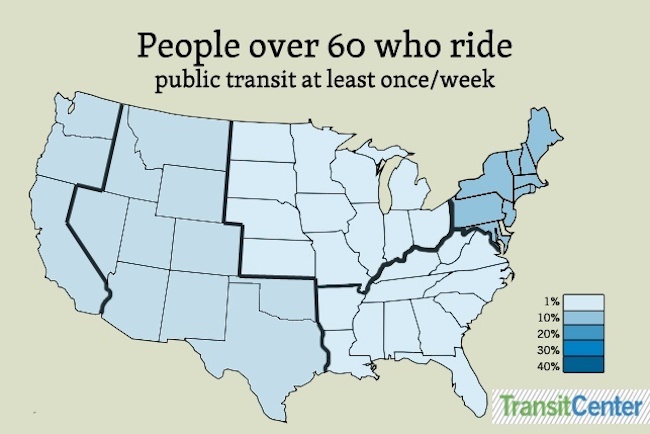
43% of those under 30 use public transport at least once a week, while only 9% of those over 60 do so, despite the latter group being significantly smaller. It is true that older individuals may find it inconvenient due to mobility issues, making mass transit less ideal. However, even among parents over 30, public transport usage is 16% lower than that of younger individuals.
Given these responses, deeper questions about attitudes were asked, revealing that upbringing and development significantly influence attitudes towards using mass transit. Interestingly, Baby Boomers, who did not have much access to personal vehicles in their childhood and relied more on buses, do not encourage their children to use public transport but prefer to drive them instead. In contrast, Millennials use mass transit because they cannot obtain a driver's license. This reasoning seems peculiar, as it suggests that neither group truly wants to use mass transit.
In reality, it relates to the context of their living areas. Having good mass transit may not necessarily reduce the demand for personal vehicles, but it must also consider the neighborhoods they reside in. 58% of Millennials are dissatisfied with their neighborhoods because most live in suburban areas or residential zones. In our country, this means living in areas with low-density residential land use (Y.1-3), resulting in insufficient local services. They need to access services from elsewhere, which may require good and easily accessible mass transit. What they truly desire is to live in neighborhoods that blend residential and shopping areas, as they do not actually want to move into the city.
Reading this study, I can visualize our own country as well. We are quite confident that people in rural Thailand love their hometowns and do not wish to cluster like birds in a nest in Bangkok. However, due to the uneven distribution of development, they must reluctantly seek better opportunities and services. Just think about how many years it has been since Bangkok has had a subway, yet no other province has one. We don't even need to count subways; we can't even see any buses. With this attitude, the news of electric train development in other provinces is a significant and encouraging matter for people in rural areas - เทอร์ร่า บีเคเค
Article by: TerraBKK Investment Tips
TerraBKK Find Good, Affordable Homes