6 Enviable Smart Cities: Examples of Great Cities Enhanced by Technology
Efficient transportation with timely bus schedules, non-congested roads, excellent public health, safe neighborhoods with surveillance cameras, community energy production, and a commitment to listening to citizens' voices—these are the hallmarks of a dream city that many aspire to live in. Fortunately, such cities are no longer just a dream; they exist in reality today.
Smart City initiatives are being developed in many cities around the world to adapt to the 4.0 era by integrating technology into the daily lives of citizens, whether in transportation, energy use, or infrastructure. This aims to create comfortable cities that resemble our dreams while ensuring the well-being of their residents.
Although Thailand has yet to establish a fully developed Smart City, several provinces and universities are currently in the development phase. While we wait for Smart Cities to emerge, The MATTER introduces you to six exemplary smart cities, showcasing their advancements and how they enhance the convenience of urban life.
Milton Keynes – UK
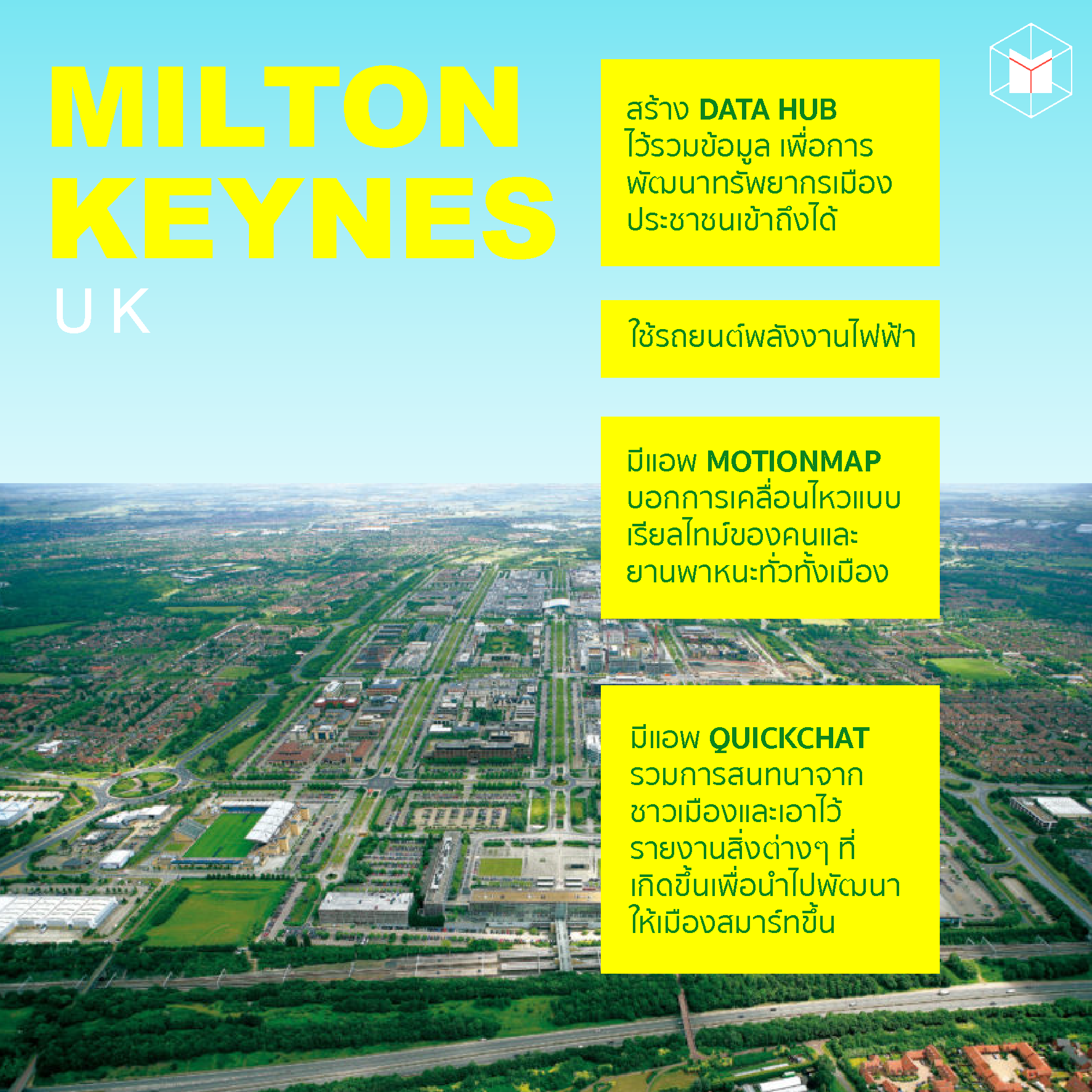
When discussing Smart Cities in the UK, Milton Keynes in the south of England stands out. Recently, it won three awards at the Smart Cities UK Award 2017 for its achievements in data, communication, and energy. The core of this Smart City project is the creation of a Data Hub, a modern information center that consolidates data on energy, water consumption, public transport, society, and the economy, along with satellite data. Currently, there are over 700 datasets available for urban resource development, accessible to the public.
The Data Hub is utilized in various areas, such as public transport, which connects data with users through public transport booking systems and payment methods. There is also the MotionMap application that provides real-time movement data for people and vehicles throughout the city, including information on schedules, parking spaces, road routes, and congestion assessments to help residents avoid traffic and make informed energy use decisions. The city promotes electric vehicles charged by solar energy, and the community has a data usage program that collects and analyzes energy consumption data to help residents use energy efficiently, aiming to reduce carbon dioxide emissions and fuel consumption.
This initiative is based on the belief that citizens are the future of the city, thus it opens opportunities to listen to their needs. There are spaces for discussions with residents about ideas and the impacts of various activities and projects, along with the QuickChat application that gathers conversations from citizens and allows them to report issues, such as late buses or other needs, to further improve the Smart City.
Amsterdam – Netherlands
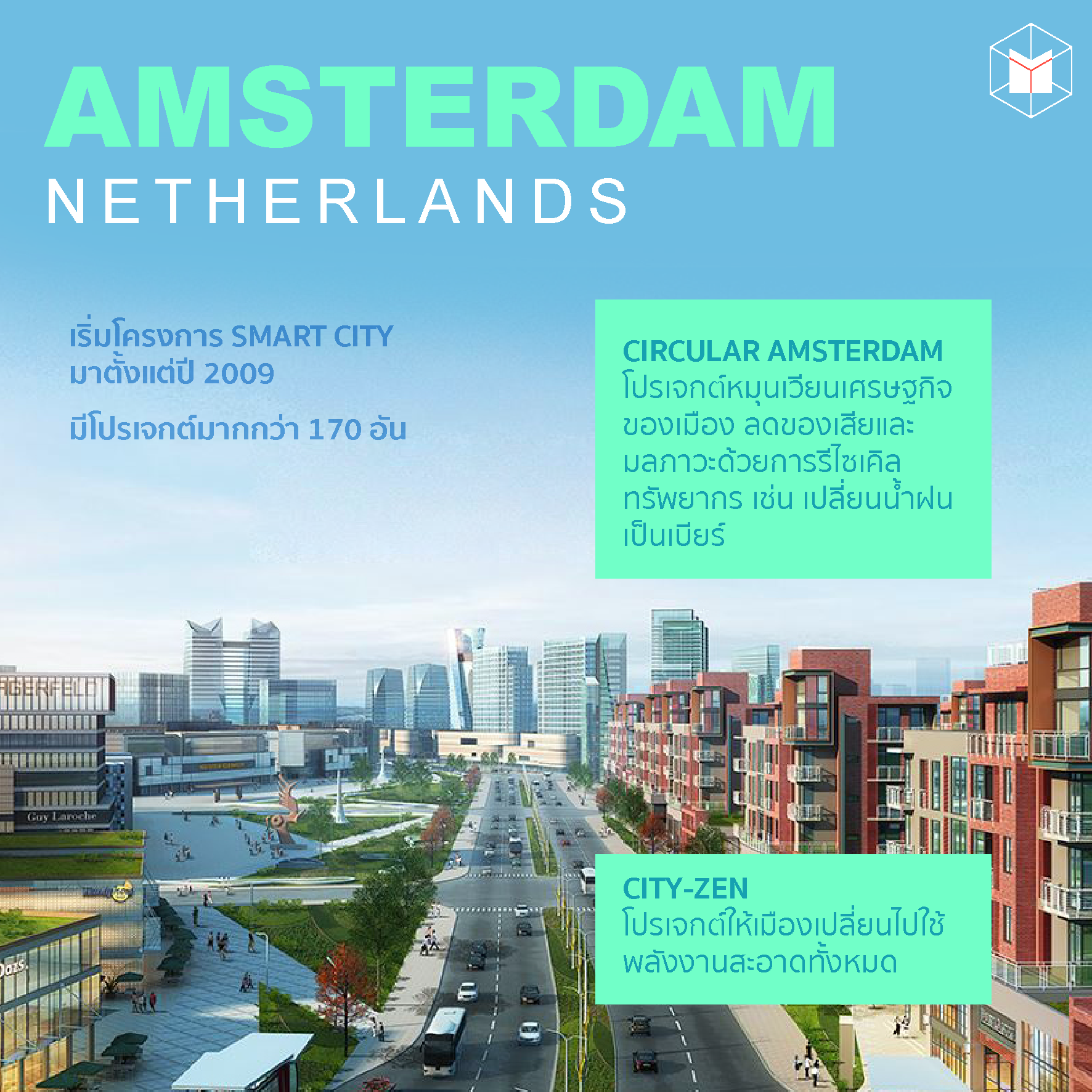
The beautiful Netherlands is also not left behind in modern city development. A clear example is Amsterdam, which has been initiating its Smart City project since 2009, with over 170 projects developed collaboratively between the public and private sectors. The goal is to address traffic congestion, save energy, and enhance public safety.
One notable project is 'City-zen', which aims for the city to transition to entirely clean energy sources, including solar, wind, biomass, and geothermal energy. It also seeks to integrate these energy sources with urban systems, buildings, and the daily lives of residents, such as plans for solar energy storage and selling excess energy back to the grid.
Amsterdam also aims to create a circular city through the Circular Amsterdam project, which focuses on circular economy practices, including reducing waste and pollution by recycling resources. This includes projects like converting rainwater into beer or redesigning existing materials and products for greater efficiency.
Additionally, there are numerous projects across various sectors such as infrastructure and technology, education, mobility and transport, and citizens' quality of life. The city remains modern and smart, with details of various projects, including operators, goals, and progress, available for public engagement through the city's website.
Stockholm – Sweden
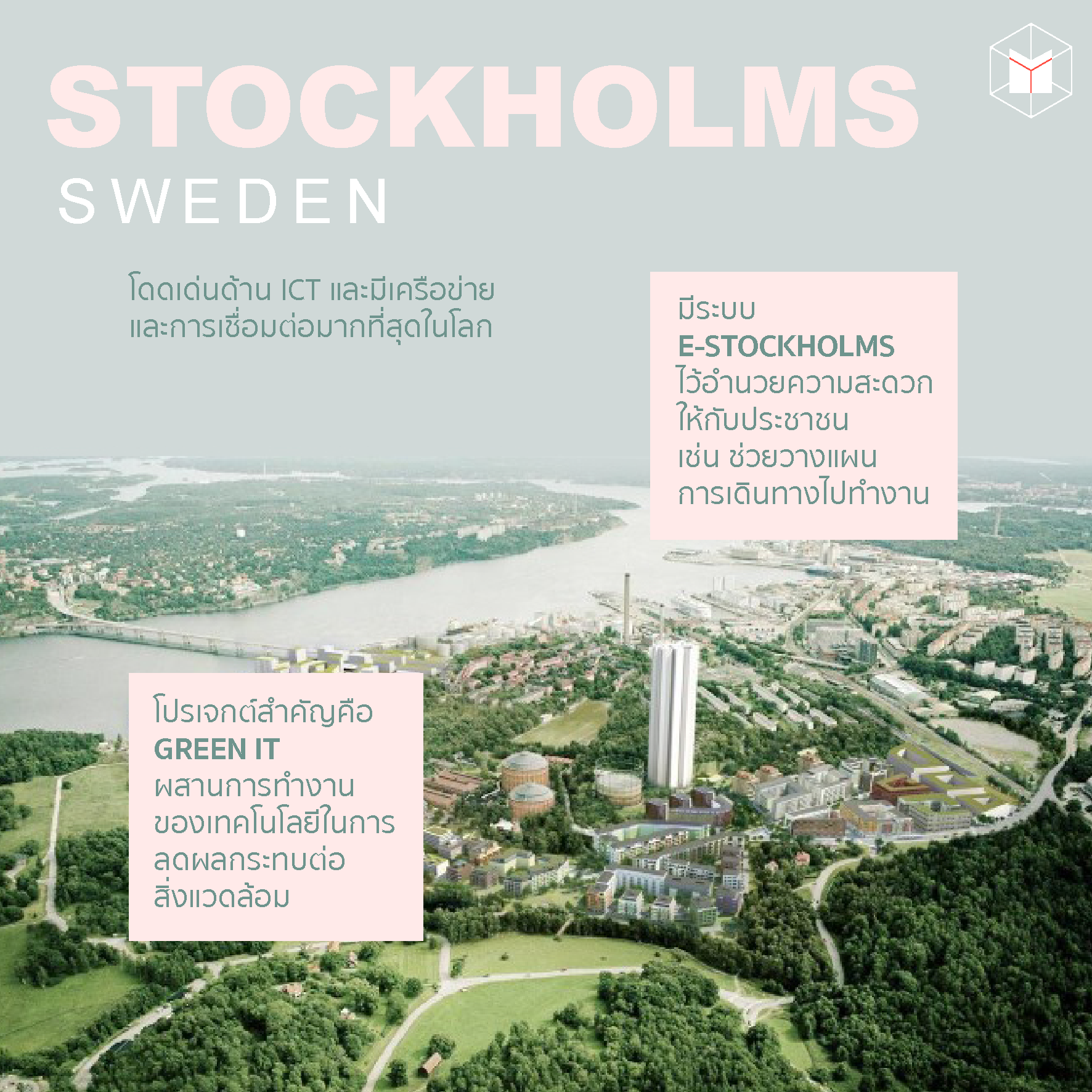
Stockholm, the capital of Sweden, is known as the largest capital in Scandinavia. The Smart City of Stockholm stands out in ICT and has one of the most extensive networks and connections in the world, thanks to the installation of fiber networks and various IT operations to connect data for sustainable societal development.
Stockholm has a significant project called 'Green IT', which integrates technology to reduce environmental impacts, such as energy-efficient buildings that lower heating costs, traffic monitoring to reduce road time, and the development of e-services to minimize paper use.
The e-Stockholm system provides public services that prioritize citizens' needs and facilitate various aspects, from licensing to elderly care and planning work commutes, including a parking reservation system.
The Smart City of Stockholm also aims to leverage its IT strengths to connect various city networks, including businesses, government, and citizens, in communication and economic collaboration. Within the city, there is an area called Kista Science City, a leading global ICT hub where universities, government, and private sectors collaborate on data and communication technology development for the city's Smart City projects.
Barcelona – Spain
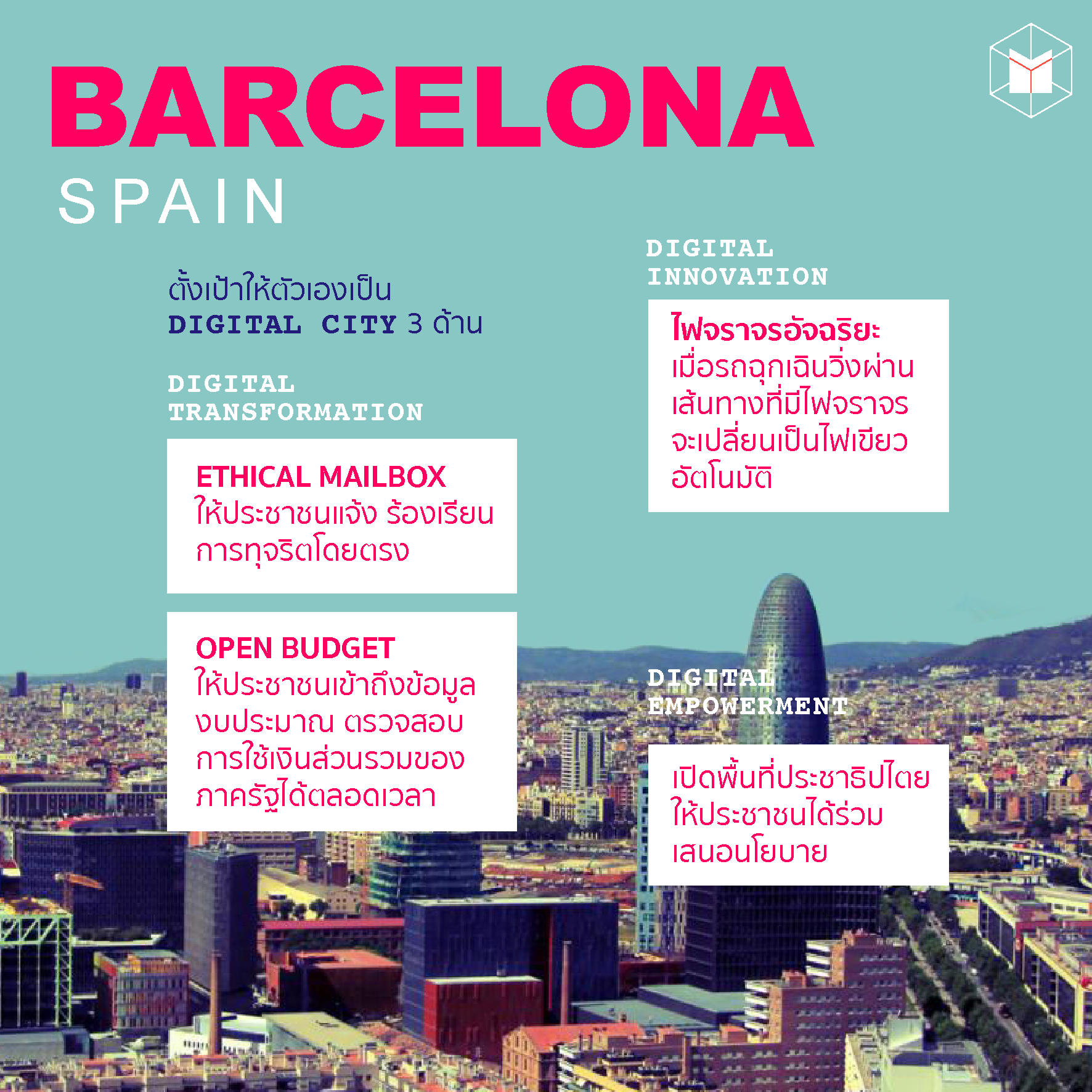
Barcelona is not just known for its football team; it also has impressive urban development projects. The city aims to become a Digital City by leveraging digital technology to enhance the lives of its residents, focusing on investing in public digital infrastructure.
The digital aspect of Barcelona is divided into three areas. The first is Digital Transformation, which uses technology and data to serve citizens, create government transparency, and foster participation, such as the 'Ethical Mailbox' for reporting corruption directly or the 'Open Budget' initiative that allows citizens to access budget information and monitor public spending.
The second area is Digital Innovation, which supports the use of various technological innovations, such as sensors in public park water systems that send data on water levels for plants, bus network technology that collects and analyzes bus operations to reduce traffic issues, and smart traffic lights that automatically turn green for emergency vehicles like ambulances or police cars.
The final area is Digital Empowerment, which uses technology to build a better society and community, such as promoting education, offering technology training courses, and opening Fab Labs for public learning about digital production science and various technologies. There are also democratic spaces for citizens to propose policies, enhancing government collaboration with the public.
Fujisawa – Japan
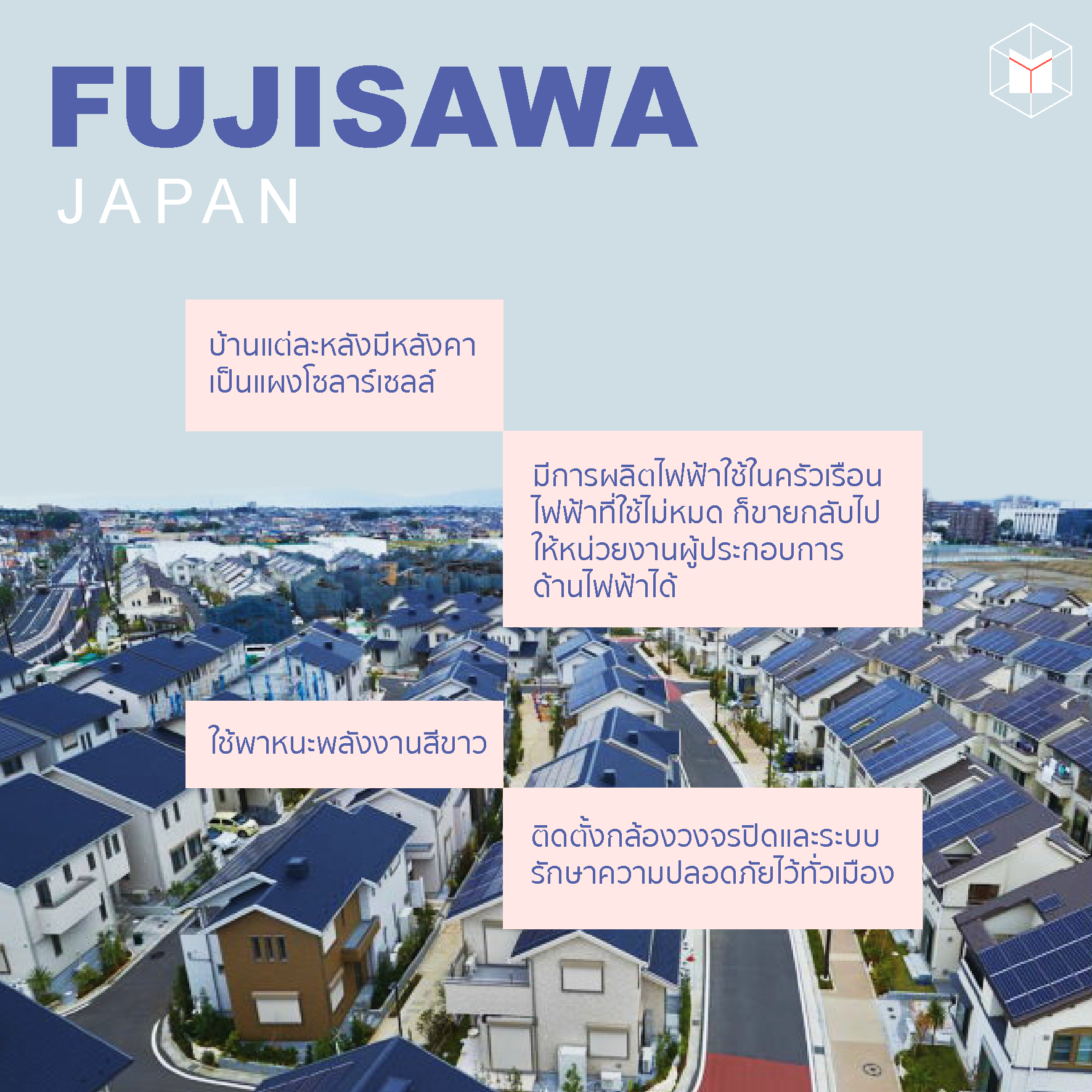
Fujisawa Sustainable Smart Town (Fujisawa SST) in Kanagawa Prefecture is a smart city developed through collaboration between the public and private sectors. This city consists of 1,000 homes and has a vision for the first 100 years of developing high-tech infrastructure that can be integrated into the daily lives of all residents.
Each home in this city features solar panels on the roof, with backup energy storage, promoting household electricity production. Excess electricity generated but not used is sold back to the electricity provider. Public spaces and communal areas also have solar panels installed. In the event of an earthquake, disaster, or power outage, this city can produce its own energy and has resources stored for continuous use for up to three days!
In addition to self-generated electricity, the city also collects rainwater for use, such as watering plants, washing cars, and flushing toilets. Vehicles in this city use clean energy, such as electric cars and bicycles, with charging points available in each home and public areas. The city aims to reduce carbon dioxide emissions, water usage, and reliance on alternative energy sources.
Safety and property security are also priorities in this city, with surveillance cameras and security systems installed throughout. The goal is to create a quality society where community members interact positively and share happiness.
Singapore

Singapore, despite being a country established just over 50 years ago, has plans not only to transform its city into a Smart City but also to become a Smart Nation, a nation of innovation. The government aims to use IT technology to create jobs and generate income, with a goal of transitioning to a cashless society utilizing e-Payment systems across all businesses.
Singapore emphasizes the integration of technology in all aspects, including the collection of Open Government Data, allowing citizens and the private sector to access government information for beneficial use. However, while modernizing the city with IT, Singapore also prioritizes cybersecurity to protect data security, ensuring the privacy of citizens' information.
The Smart Nation initiative in Singapore also focuses on public health, citizen healthcare, and transportation. The government anticipates that in 15 years, the country will enter an aging society, and efficient healthcare services supported by technology will enable the elderly to live comfortably. In transportation, Singapore is developing self-driving cars, and in healthcare, TeleHealth technology allows patients to access healthcare systems from home.
The Singapore government has also developed numerous applications that benefit the quality of life for Singaporeans in various aspects, including health apps like HealthHub for recording health data, MyResponder for immediate assistance in cardiac emergencies, and MyTransport.SG for transport schedules and routes, along with safety apps for reporting incidents or accidents, among many others provided for public use.
References:
https://amsterdamsmartcity.com/
http://international.stockholm.se/
http://ajuntament.barcelona.cat/
Read the original article here
Thanks to the information from https://thematter.co/pulse/smart-city