
Shall We Share? When the Sharing Economy Becomes the New Economic System
Mark the date on your calendar and count the days, waiting for our turn to join a sharing group. For those familiar with the community lending system, commonly referred to as 'sharing', the culture of sharing has long been a part of Thai society.
In the era of Thailand 4.0, we are introduced to another aspect of sharing known as Sharing Economy. To clarify, it has nothing to do with traditional sharing; there are no loans, no interest, and no worries about being scammed. Instead, it generates financial returns just the same.
When there's something to share, it can generate income.
Sharing Economy is an economic model where anyone can share their possessions (anything that can be rented) to create added value. The emergence of this economic model is a result of easier internet access, facilitated by platforms that act as intermediaries for market sharing (there's that word 'share' again). This practice of sharing for a fee is often referred to as a peer-to-peer rental market.
What can be shared in the Sharing Economy?
The boom of the Sharing Economy has its roots in the ease of access through platforms, making it much simpler than traditional business models. Back in 2008, the trio behind Airbnb launched a business that allowed people to share their accommodations for income, marking the debut of the most successful Sharing Economy venture in the world. The following year, Travis Kalanick introduced a similar concept, transitioning from rooms to cars with Uber, which also found great success.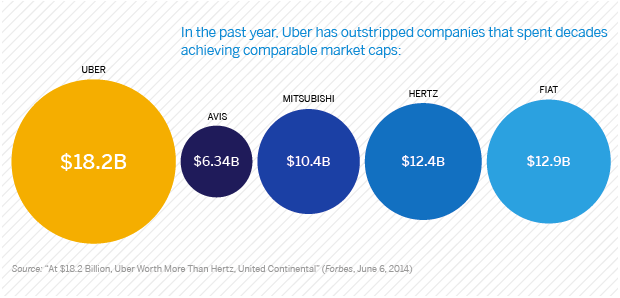
Uber's revenue quickly surpassed that of traditional car rental businesses worldwide.
Many who have engaged with such business platforms may have heard that Uber is the world's largest taxi company without owning a single vehicle, and Airbnb is the largest accommodation provider without any properties of its own. Yet, in just 4-5 years since their launch in 2014, these two companies generated revenues of 10-18 billion USD.
This may seem unfair, as these businesses appear to exploit market gaps for profit. However, in the business world, everyone does it, and given their success, it will be interesting to see how regulations adapt.
Moreover, there are several factors supporting the growth of the Sharing Economy, such as the continuous evolution of AI and computers (even though humans are the ones accelerating this evolution). In the near future, we may have AI that can take over many tasks. Yeoh Siew Hoon, founder of WIT (Web in Travel), suggests that AI could increase our free time by up to 60%! Besides sleeping, we might hardly need to work at all.
What will people do with 60% more free time?
On weekends, if one is free yet motivated, they might want to pursue hobbies, exercise, read, shop, watch movies, binge-watch series, do homework, or analyze stocks. The possibilities for human activity are endless. This shift will fundamentally change how we use our time, as people will have ample free time to seek additional income opportunities, thus driving the growth of the Sharing Economy.
Since traditional sharing involves circulating money and paying interest, how do we transition to sharing in the Sharing Economy?
Anything can be shared if you do your homework. In China, there is a popular bike-sharing app that allows users to park anywhere. In Shenzhen alone, there are over 520,000 bikes available for rent. However, this system is not without issues, as it has led to increased traffic violations, bike accidents, and rampant theft.
Besides bikes, there are even apps for sharing umbrellas, but they face similar challenges as bike-sharing, with over 300,000 umbrellas reported lost, valued at around 18 million yuan. This has led to skepticism about whether umbrellas can succeed when bikes have struggled.
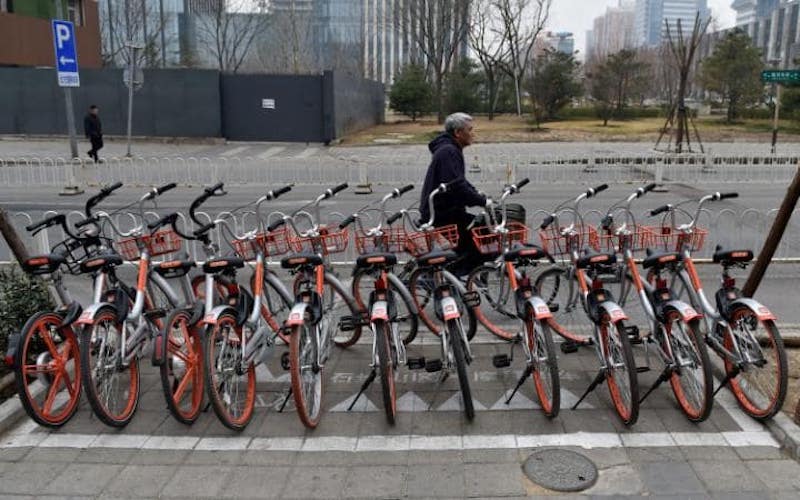
Image source: http://www.telegraph.co.uk
However, one sharing platform that seems to be thriving is TaskRabbit, which provides a platform for small job hiring, also known as the Gig Economy. CEO Stacy Brown-Philpot has mentioned that there are multiple interested buyers for the company. So, what else will people share next?
The Sharing Economy in Real Estate
Sharing accommodations and utilizing vacant spaces as offices and co-working spaces are currently the most successful forms of Sharing Economy. However, the trend of sharing is not stopping there. There is now a growing trend of sharing accommodations among professionals in specific fields abroad. This type of sharing is particularly appealing to those in the arts. In Brooklyn, a city known for its street art and artistic presence, artists are beginning to share their homes with fellow artists, which is becoming increasingly popular. This not only allows for camaraderie but also provides access to professional tools and knowledge exchange.
The popularity of this type of room-sharing is also spreading among production house workers in Thailand. Having a studio on the ground floor and workers living above allows for a lifestyle of continuous creativity, leading to new ideas and artistic creations.

Image source: http://thesocialnetworkcaps.tumblr.com/
Another interesting yet less discussed aspect of sharing is kitchen sharing. Consider this: many Thais dream of opening restaurants and cooking, but the barrier often lies in having the right equipment. Imagine if there were a large kitchen available for sharing, where people could use the equipment together and send food to nearby stores within a 2-kilometer radius. This could be an intriguing concept if someone were to initiate a sharing platform tailored to Thai preferences. We might witness a new charm in sharing that aligns with the Thailand 4.0 concept.
Article by: TerraBKK Investment Tips
TerraBKK: Find quality homes at great prices