Lessons from the Past Towards Sustainable Housing for Low-Income Earners
Because “home” is one of the four essential factors that everyone cannot do without, it represents the most significant investment in everyone's life, whether rich or poor. Each person works hard to save money in hopes of owning a home someday, amidst a rapidly growing real estate market with various housing projects available everywhere.
But are we sure? Do these housing options meet the needs of the largest demographic in this country, which is the “low-income group”?
Another insight from the seminar “TREA TALKS REAL ESTATE 2017”, organized by the Thai Real Estate Association in collaboration with TERRA BKK and numerous business partners, highlighted the importance of creating housing for these residents. They are a crucial demand that drives the nation just like any other group, and the supply, which consists of various real estate developers, should not overlook them.
The Reality of Housing Problems in Thailand
Assoc. Prof. Dr. Kuntaltip Panichpakdi from the Department of Housing, Chulalongkorn University painted a picture of another aspect of the ‘housing problem for Thais’ and presented possible alternatives for designing homes, public spaces, and modern urban environments that could enhance quality of life.
- Who are low-income earners? Why are they important? For example, in a successful shopping center, 10% are executives, while 80%—the backbone that keeps the shopping center running—are sales staff, receptionists, security guards, cleaners, delivery personnel, etc. This means that cities cannot do without low-income earners, as they are a vital force in driving the economy.
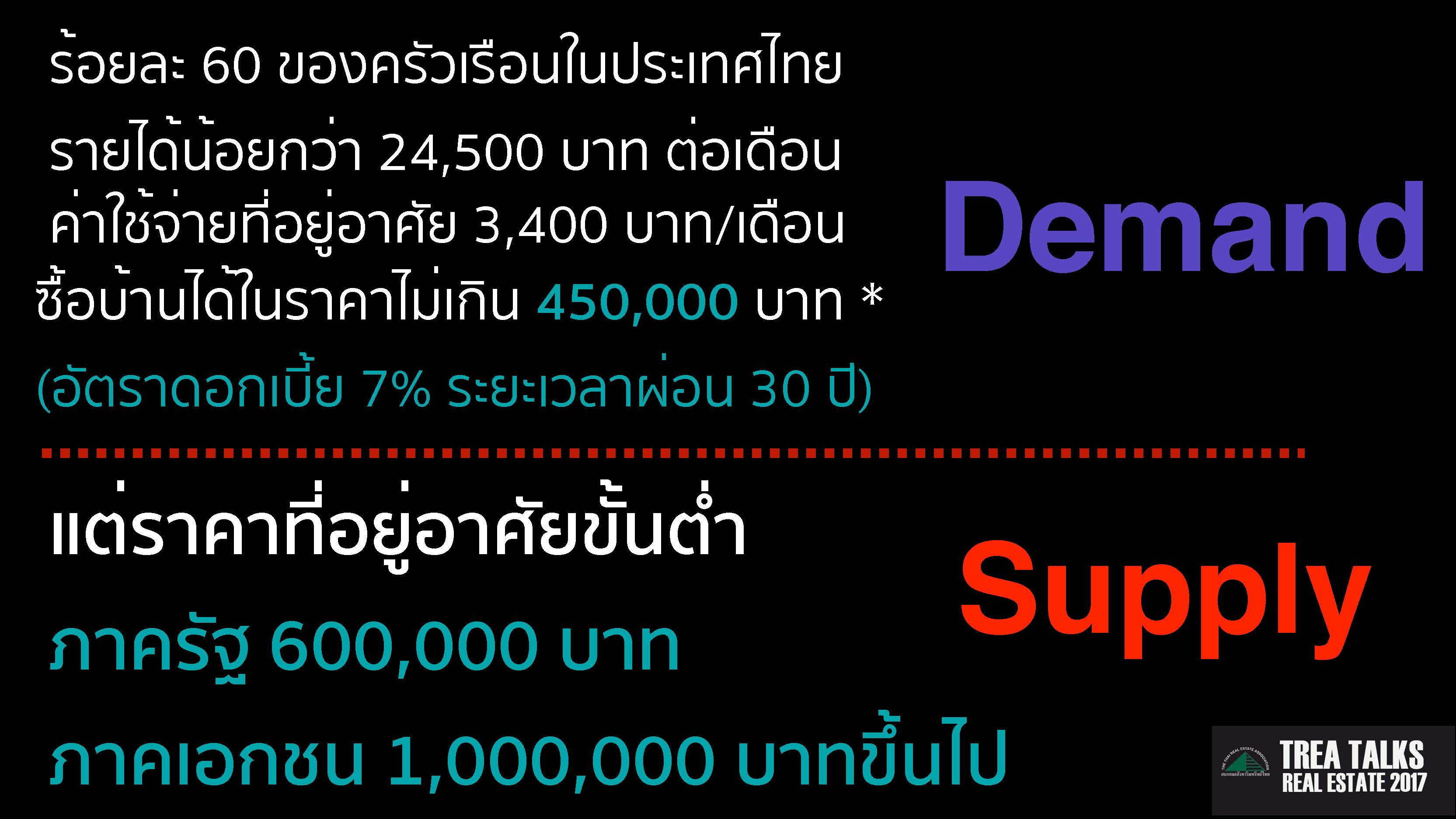
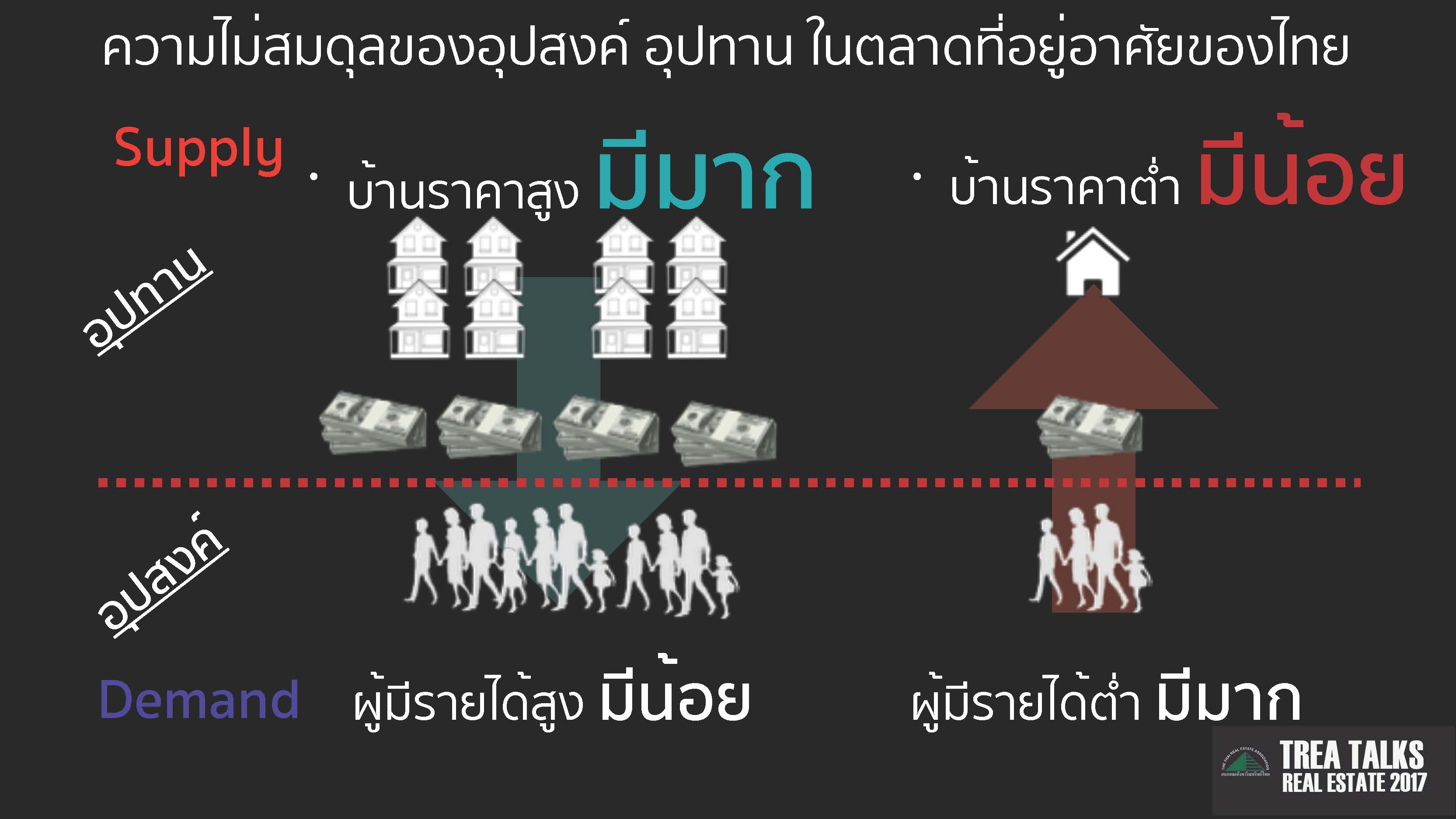
- 60% of low-income earners have an income of no more than 24,500 baht per month, which means their average housing affordability is no more than 3,400 baht per month, equating to a home price of no more than 450,000 baht. However, in our real estate market, prices have risen significantly, with even public housing costing around 600,000 baht, while private developers offer housing starting at over 1 million baht. This creates an imbalance between price and quantity in terms of demand and supply.
- When there is a mismatch in housing availability, it leads to numerous social problems.
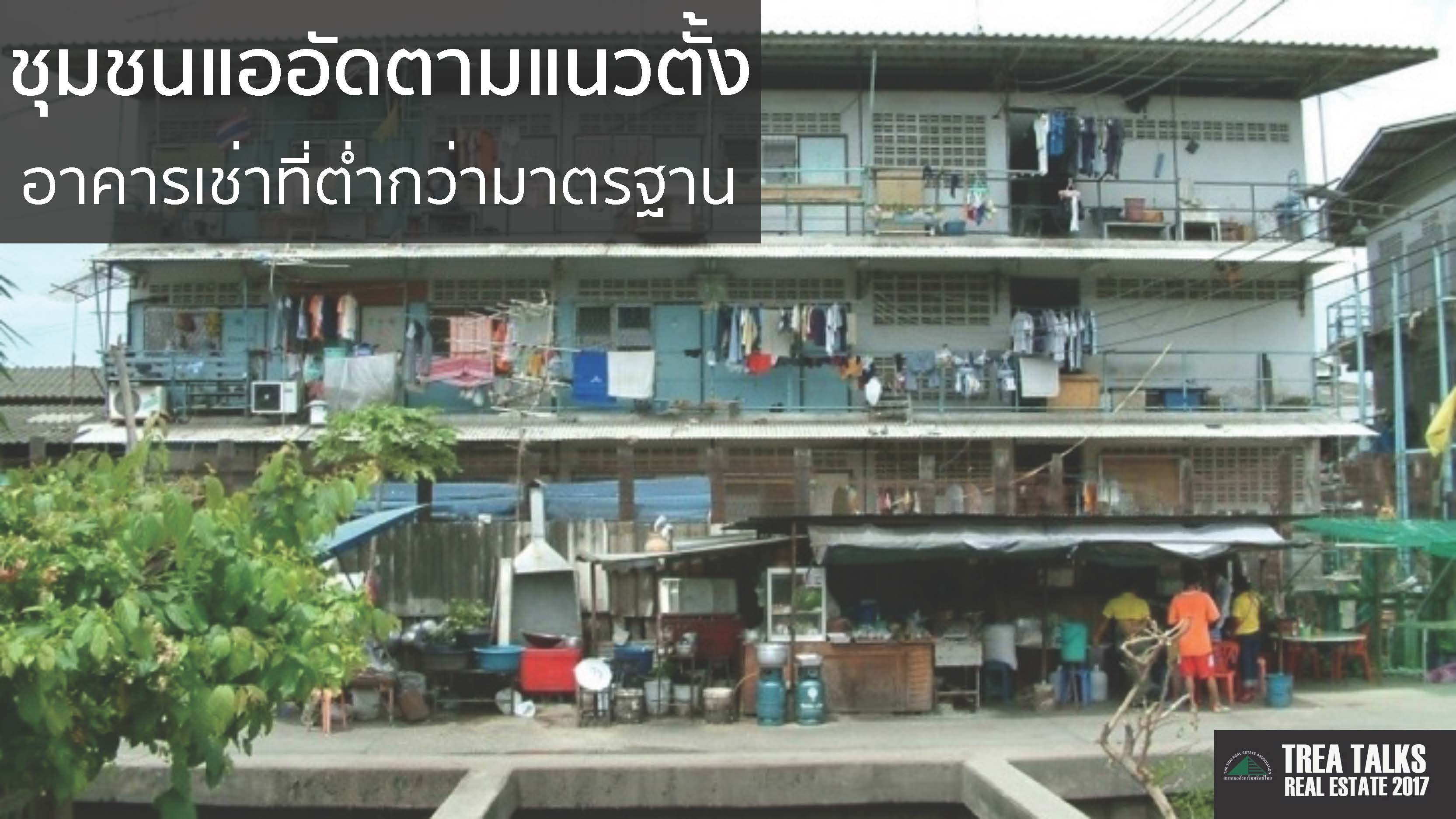
1. Housing shortages lead to overcrowded communities—Low-income communities are scattered throughout every city in Thailand, transforming into both horizontal and vertical overcrowded communities, impacting the quality of life not only for low-income earners but for everyone in society.
2. Lack of public utilities—This results in unhealthy living conditions across the city. Has the burden of housing for low-income earners been solely placed on the government?
3. Problems that will arise in the next decade—In terms of urbanization or globalization, cities will grow rapidly, with people migrating to work in urban areas, both Thais and foreigners. It is certain that 60% of these individuals will be low-income earners.
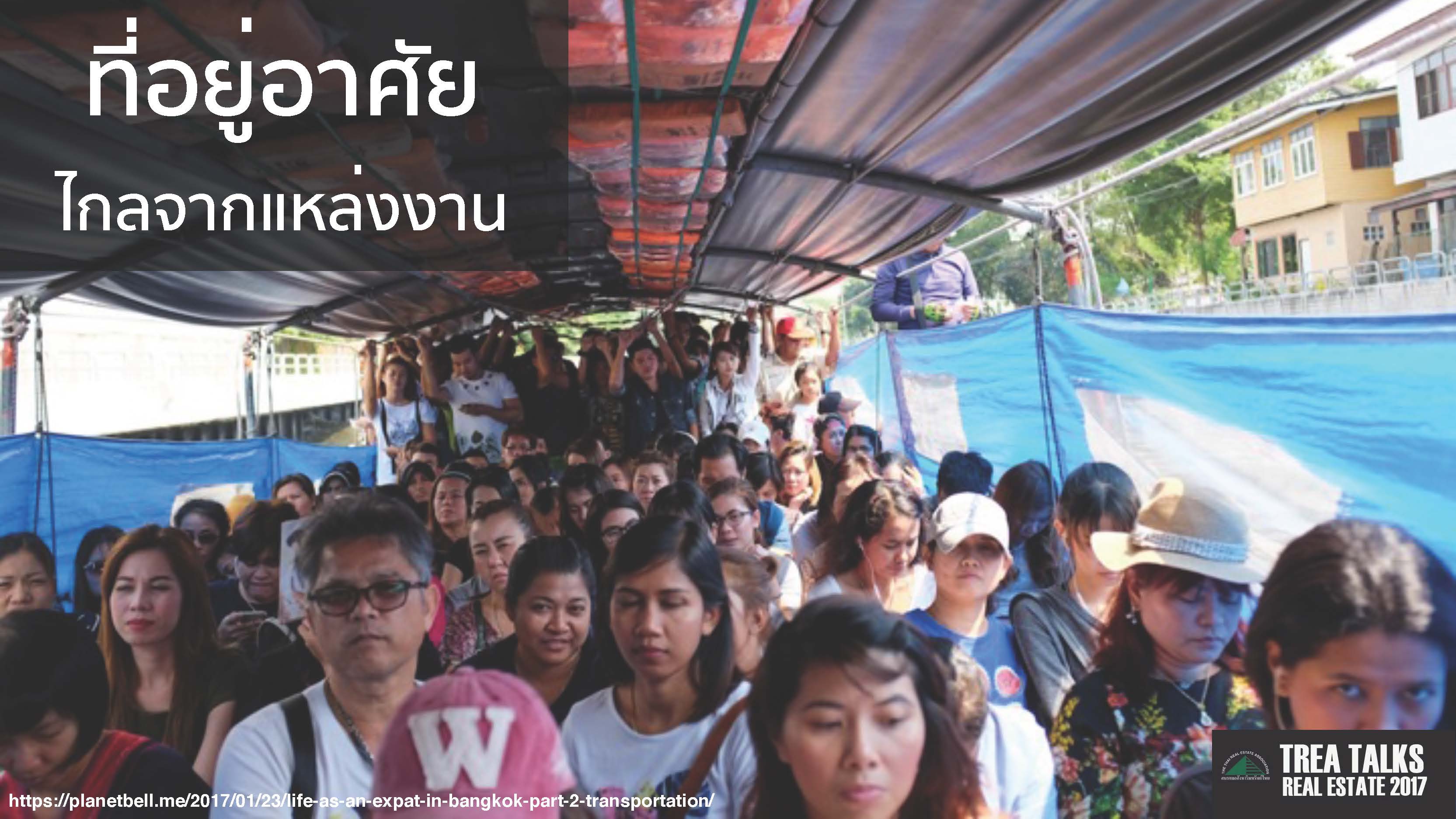
- Amidst these problems, the world is signaling positive trends for solutions. The World Habitat III declaration emphasizes that all cities must develop together to leave no one behind. Subsequently, a 20-year national housing development strategy was created, focusing on collaboration among all sectors, along with the initiation of policies for housing management and development for well-being, aiming to create livable cities.



- New challenges arise if everyone continues to work independently towards different goals. Our cities will resemble Brazil. It is time to shift our goals towards developing community and urban housing for well-being, ensuring no one is left behind.

- Developers are the leaders in urban development and have the potential for management. Therefore, these individuals represent hope, and with the upcoming urban development corporations, there will be partnerships across all sectors in society, shifting from individual goals to collective goals, from personal profits to shared profits.

Connecting transportation systems as an alternative solution
It seems that the solution to the housing problem for low-income earners is a national issue that is difficult to untangle. Dr. Chatchart Sitthiphan, former minister and executive of Quality House Public Company Limited volunteered to share two perspectives, both as a businessman and a former government administrator, on how to begin addressing the dimensions of urban life, business, and the lifestyles of people. He expressed three main points regarding The Future: What / Where / Who, before highlighting that connecting transportation and public transport systems into a complete network will be another promising alternative. The key points can be summarized as follows:- Where: The problem with real estate is that once produced, it must be sold somewhere. Real estate is not a movable object; where we build it, we must sell it there. Location remains crucial in real estate today, with major CBDs being Ratchadapisek and Rama IX, considered good locations due to the Airport Rail Link, subway, and expressways. Thus, the true meaning of location is Transformation.
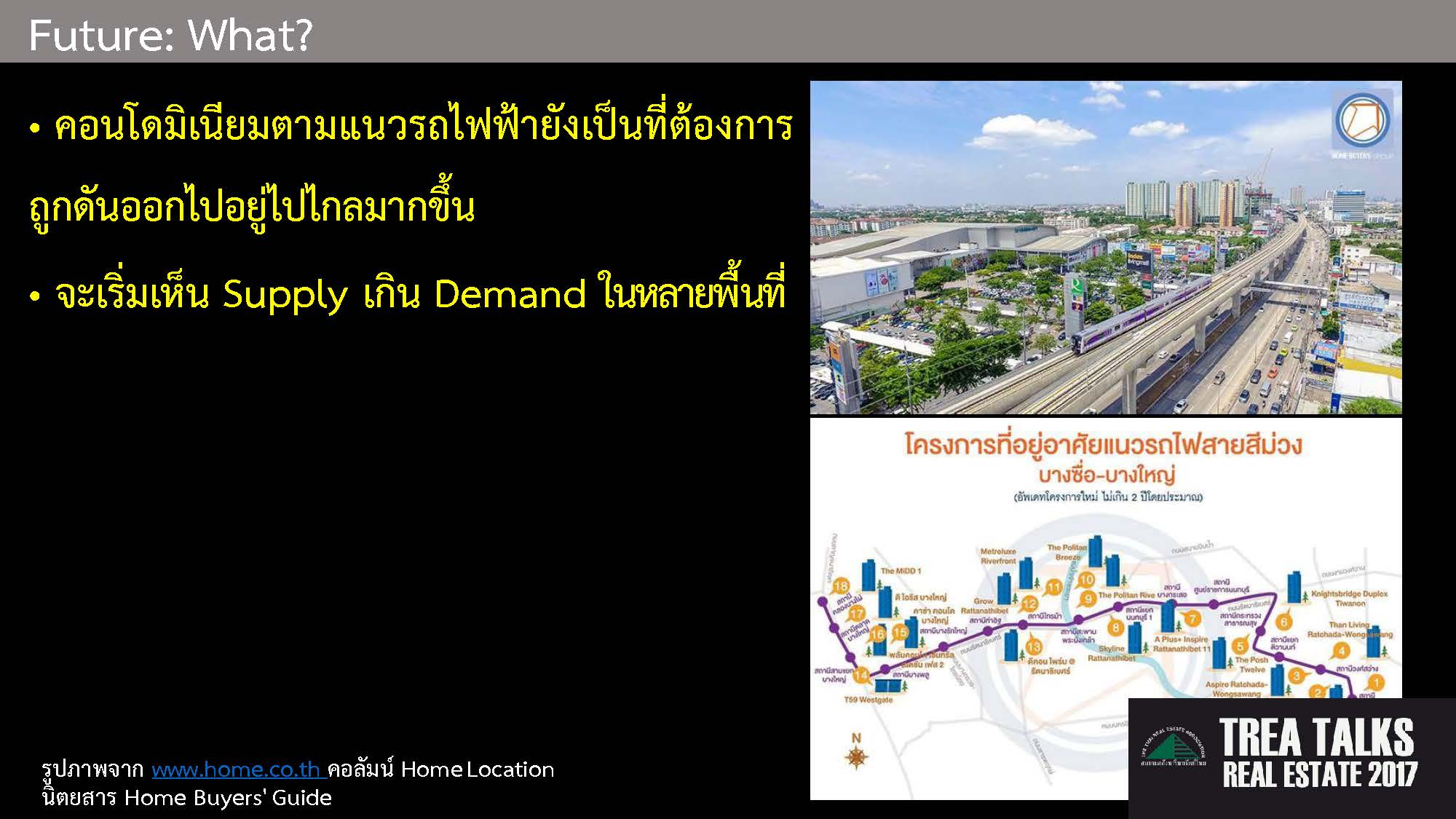
- What will sell well in the future: From the past, it can be seen that wherever the subway reaches, more real estate will emerge. Developers still rely heavily on the subway, but in the future, townhouses will become a more popular choice for the new generation.
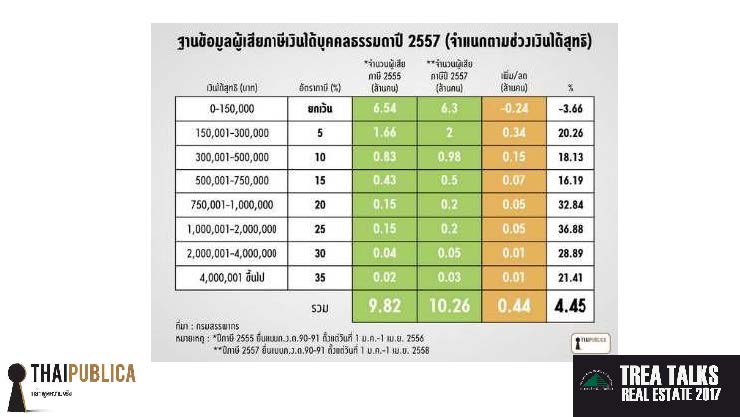
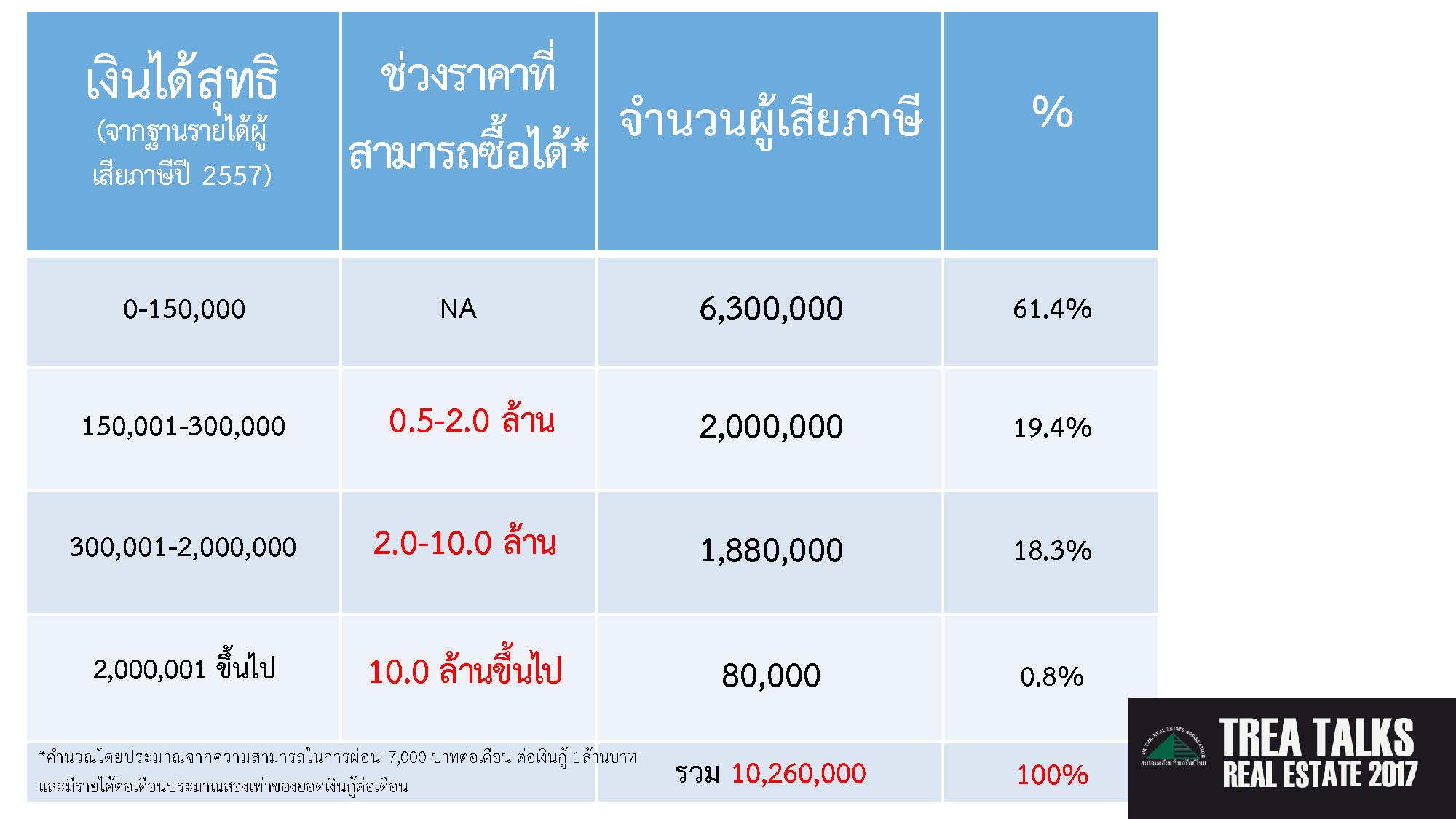
- Who are the future buyers: Currently, housing prices are categorized into three levels: 500,000 - 2 million baht for the lower level, 2 million - 10 million baht for the medium level, and over 10 million baht for the premium level. However, data from the Revenue Department indicates that in 2014, there were over 6 million taxpayers with a net income of 0 – 150,000 baht (as seen in the comparison image), but this group cannot afford to pay for housing. Comparing taxpayer numbers, developers must consider how to compete for customers.
- In the past eight years, the average income of Thais has increased by 30%, but housing prices have risen by 38%, with townhouses increasing by 46%, condos by 69%, and land by 80%. The lower market will be heavily squeezed as property prices rise beyond income growth. In the future, developers will increasingly target the 2-10 million baht market. This indicates that the poor will be pushed out of Bangkok, even though they are a significant part of society, affecting transportation policy significantly.
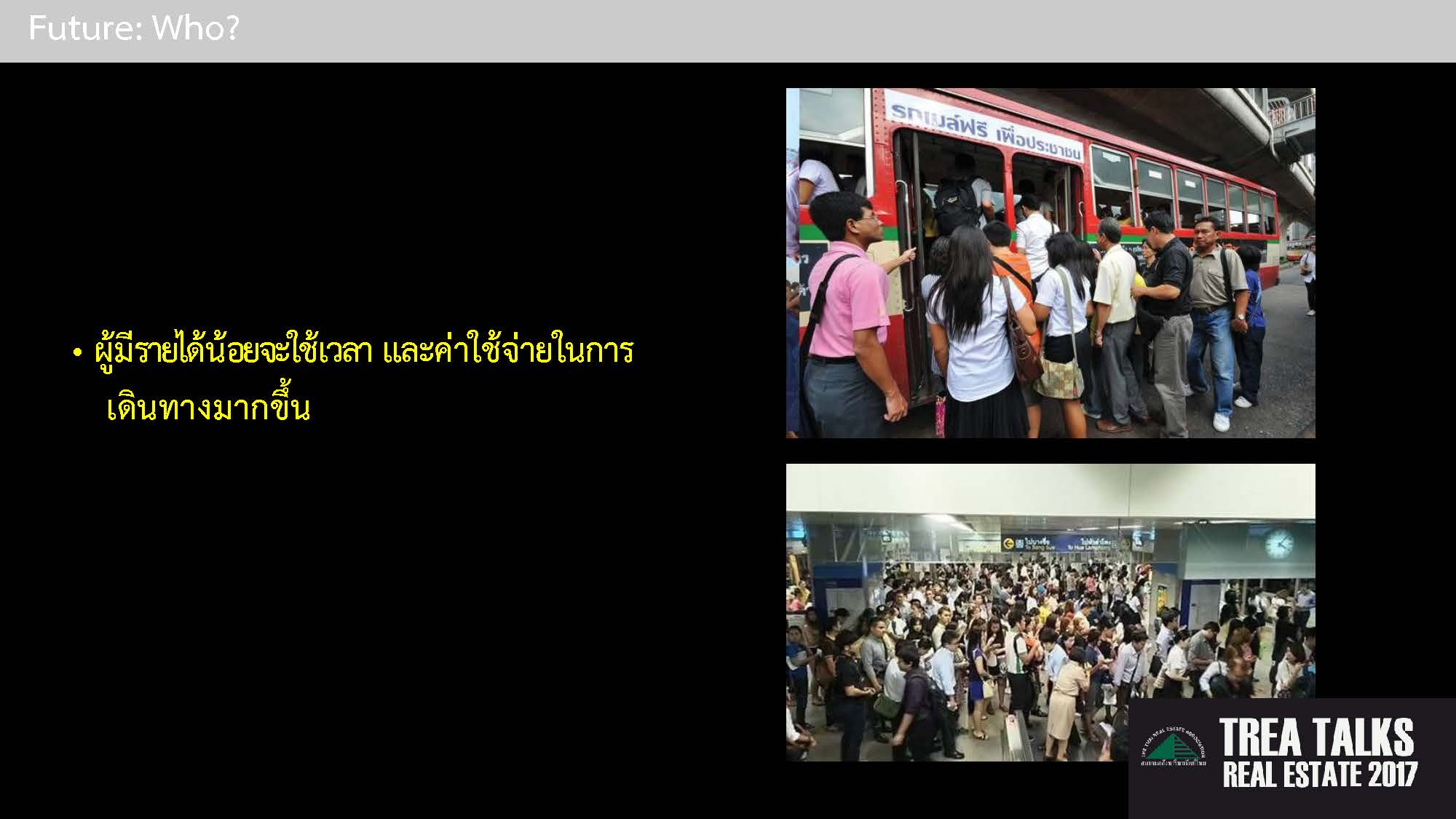

- The government must recognize the impact of fare pricing. If all fares are set equally, say 20 baht across the board, the landscape of real estate will change immediately. Fare and transport pricing will become the heart of real estate.
- The state must play a role in reducing housing inequality, similar to Hong Kong and Singapore, possibly by investing in land and allowing the private sector to develop housing for low-income earners. Development should occur in large increments of 500 - 1000 rai to create an impact and improve their quality of life. Affordable public transport policies should also be considered as an option for the state.

Information from TREA TALKS REAL ESTATE 2017 on June 29, 2017
Article by: TerraBKK Knowledge Base
TerraBKK: Find good, valuable, and affordable homes