A Clear Prediction: The Future of Real Estate in 8 Years as AI Becomes a 'Key Assistant'
It seems that ‘technology’ today is influencing humanity at almost every step, no longer just a parallel line as we see on TV or in movies. These intelligent innovations are transforming nearly every industry known to mankind, including construction and real estate.
Currently, ordinary cities are evolving into Smart Cities, allowing people to access public services quickly. This transformation affects not only urban life but also travel, home builders, construction material suppliers, municipalities, governments, and much more.
These developments provide an overview of URBAN TECH, which will connect everything more collaboratively, leading to improved lifestyles and sustainable happiness. As “Boat” Phait Padoongthin, who revolutionized the online construction business in Asia with the establishment of Builk Asia, a free cost estimation software for construction businesses, mentioned at the TREA TALKS REAL ESTATE 2017 seminar organized by the Thai Real Estate Association in collaboration with TERRA BKK, a knowledge hub and consulting service for real estate investment, supported by numerous business partners.
It must be acknowledged that the current global trend of innovation and new technologies is contributing to the development of the Thai real estate business, whether it’s design software for all types of constructions that can create hundreds of models in one night or applications that accurately calculate material quantities and the number of workers needed on construction sites.
However, a thought-provoking question from that seminar is: Where will these innovations lead the lives of construction workers and real estate professionals to ‘end’?
As someone who has already transformed this industry, Boat illustrated what the work of construction professionals will look like in 8 years (Imagine 2020), providing examples that felt almost cinematic.
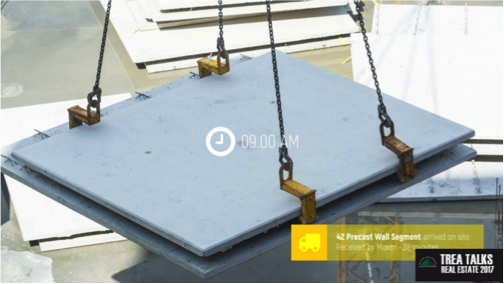
9:00 AM: Checking the phone for a report that the Precast (precast concrete components) you need has arrived at the job site, and an employee has signed for it via mobile.

10:00 AM: Starting a video conference with architects, designers, and consultants, no longer needing to discuss blueprints as they are now conversing on BIM (Building Information Modeling). By that time, using BIM will become the standard language of construction work, allowing for quick resolution of architectural design issues that clash with system work. Then, a purchase order arrives for approval, which can be reviewed entirely via phone, eliminating the need to drive to the office to sign it.
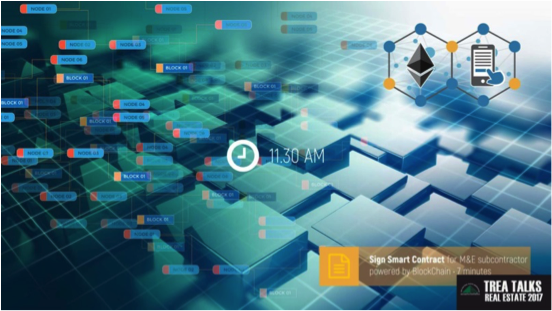
11:30 AM: Signing a contract as a Smart Contract using technology called Blockchain (a decentralized data storage system that is reliable and prevents fraud without needing intermediaries), which enhances contract security. Forget about signing bulky documents.
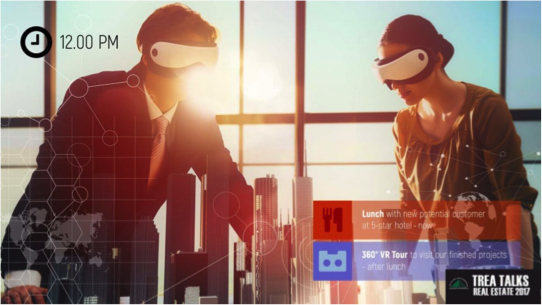
12:00 PM: Taking clients to see a completed job site during lunch using VR technology.
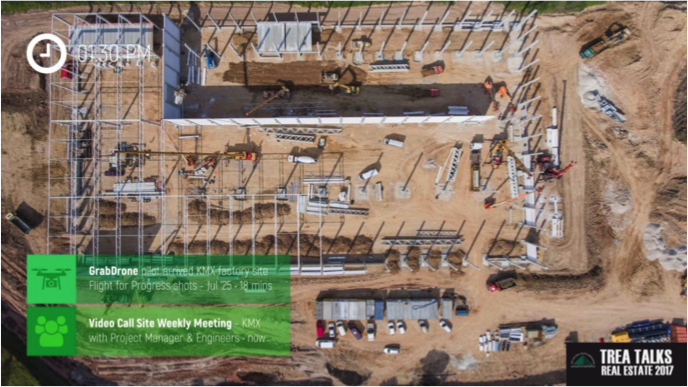
1:30 PM: Using drone technology to inspect the job site, without needing to own the drone. In the future, there will be rental services for drones, which we can call upon to create site reports for project owners. At the same time, we can video call with other job sites, eliminating the need to rush to the site. This type of drone service is already happening in the U.S. today.

3:30 PM: A problem arises when a client requests you to repair a house under service guarantee. You simply choose which team to send for the job. If there’s time left, you can check on underutilized machinery and put it up for rent. In the future, Uber Heavy services will act as intermediaries for finding and renting heavy machinery in the same area. In the past, contractors may have worried about maintenance when renting out machinery, but today, smarter machines with sensors can notify themselves when maintenance is due, creating a smart check-up that will become a standard service in the future.

5:00 PM: Checking today’s financial results via smartphone, reviewing payment documents, as this is a time when there’s no need to sign checks or go to the bank.
6:00 PM: The day ends, and it won’t be difficult to take a high-speed train to see a concert in Khao Yai, as by then, public transport systems will be interconnected nationwide.
From all that has been mentioned, it is believed that this is a ‘dream’ that is achievable and not too far out of reach. However, the only thing that could prevent these visions from materializing is none other than “ourselves”, as Boat pointed out the obstacles in detail:
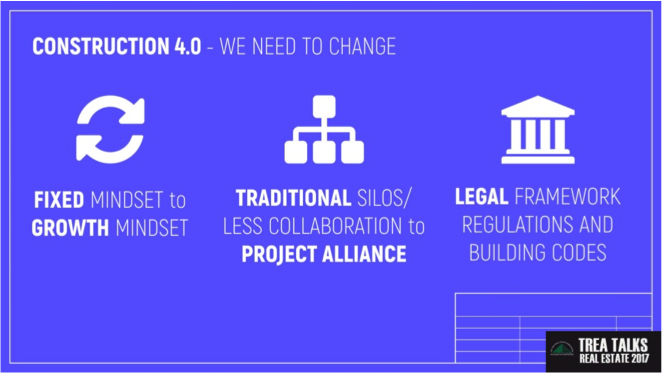
1. Mind Set of us, who often think that these things can never happen.
2. Traditional Silos still cling to old ways of working that do not allow for data integration, causing delays between systems.
3. Legal standards and various laws have become limitations, preventing the construction industry from developing as it should.
Ultimately, will the Thai construction and real estate industry move forward as it should? It is crucial to start changing from ‘ourselves’ first, as well as being open to the ideas of the new generation to move forward together sustainably.
Information from the TREA TALKS REAL ESTATE 2017 on June 29, 2017, by Mr. Phait Padoongthin, one of the speakers at this event.
Article by: TerraBKK Knowledge Hub
TerraBKK: Find good homes, value for money, and affordable prices.