How to Earn 20,000 Baht a Month: What to Invest In
Investment income is one form of passive income that doesn't require us to exert effort or work hard; instead, it comes from making our money work for us. This could involve investing in stocks, mutual funds, bonds, real estate for rent, or depositing money in a bank, among others. Many people dream of a day when their passive income, which they have gradually built up, is sufficient for them to stop working altogether, covering their expenses and allowing them to live comfortably.
How much income from investments is needed to stop working depends on each person's lifestyle. Let's play around with the idea of wanting to earn 20,000 Baht a month. What investment options do we have?
• Bank Deposits If we consider pure bank deposits, with the current interest rate at 1.75% for fixed deposits, to earn 20,000 Baht in interest per month, we would need to deposit a principal amount of 16 million Baht. This amount seems daunting because, when considering monthly withdrawals, we cannot use compound interest. Just seeing that number is overwhelming; saving up 16 million Baht would take a lifetime, especially for someone with a regular job, making this figure feel quite unrealistic.
• Mutual Funds Moving from bank deposits to slightly riskier investments could make achieving this goal more feasible. The returns and risks of mutual funds depend on each fund's investment policy. If it's a bond-focused fund, the risk is lower but so are the returns. Conversely, stock funds offer better returns but come with higher risks. If you want to achieve a monthly return of 20,000 Baht from a mutual fund, here's how to approach it.
Choose a fund that pays dividends annually, semi-annually, or quarterly. You should check the fund's historical dividend payout rates and calculate accordingly. For example, let's consider the 1VAL-D fund managed by Wana Asset Management Company. This fund currently has an NAV of 18.1875 Baht (as of June 6, 2017). Its historical dividend payout has been once a year, with the amount depending on the fund's profitability.
Assuming a dividend rate of 0.5 Baht per unit, if we want a monthly return of 20,000 Baht, that amounts to 240,000 Baht a year. Before tax deductions on dividends, we would need 266,667 Baht. Therefore, we would need to buy 533,334 units of the 1VAL-D fund, which translates to an investment of nearly ten million Baht (calculated as 533,334 x 18.1875). Does this seem more achievable? However, keep in mind that our ten million Baht principal could increase or decrease in value due to the stock market's volatility, and the dividend rate may vary based on the fund's performance.
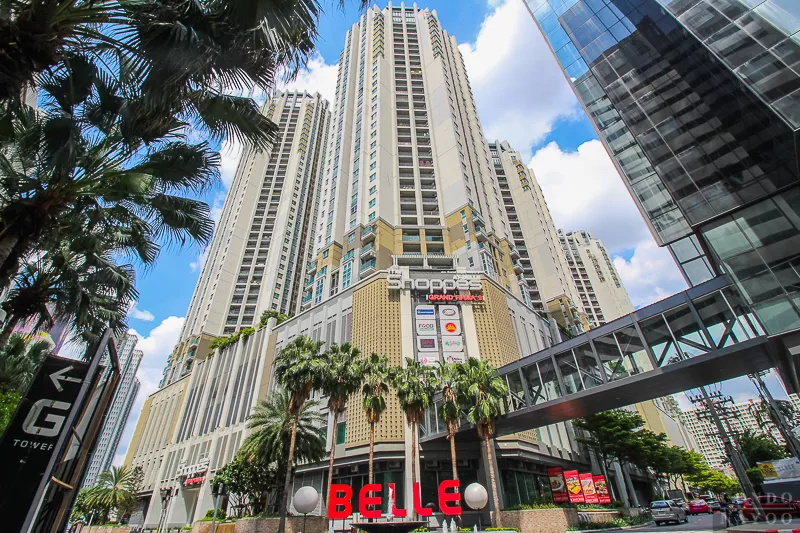
• Real Estate for Rent I have a friend who rents a new condo near Chaeng Watthana. Although it's not in the city center, it's close to the BTS, making commuting to the city convenient. The condo is a studio apartment under 30 square meters, with a rental price of 20,000 Baht per month. The condo's market value is around 3 million Baht, but the owner must also cover the common area fees, which are about 35 Baht per square meter per year, totaling over ten thousand Baht annually.
If we consider condos in the city center, like in Sathorn, Rama 4, or Sukhumvit, the investment amount would increase, but the rental income potential would also rise, with fewer issues finding tenants. A similar condo in these areas could rent for 25,000 Baht per month, but the investment might need to be around 5 million Baht. Therefore, investing in a condo to achieve an average rental income of 20,000 Baht per month would require an investment of approximately 3-5 million Baht, depending on the location.
• Dividend Stocks Stocks are a high-risk investment asset due to their volatility, which can lead to higher returns. For the goal of generating a cash flow of 20,000 Baht per month, it is advisable to invest in stocks that consistently pay dividends and are stable and have reasonable long-term growth potential.
For illustration, let’s look at one stock, but in reality, we should not invest in just one stock to diversify risk. A suitable stock portfolio should include at least 5-7 stocks.
Consider SCCC, a cement company currently trading at 305 Baht per share (as of June 6, 2017). This stock pays dividends twice a year, in July and February, with an annual dividend rate of 15 Baht (8 Baht for the first payment and 7 Baht for the second, consistent for the past four years). Therefore, to achieve an average monthly dividend income of 20,000 Baht, which totals 240,000 Baht a year, before the 10% withholding tax on dividends, we would need 266,667 Baht. This means purchasing 17,800 shares of SCCC, requiring an investment of approximately 5.5 million Baht (calculated as 17,800 shares x 305 Baht per share).
Some may wonder about short-term trading of stocks for profit. Is it possible to earn 20,000 Baht a month this way? The answer is both yes and no, as it is highly risky. There are no guarantees; some months could yield profits exceeding 20,000 Baht, while others might result in losses. Therefore, I will skip discussing short-term trading, as I am not proficient in that area.
There are various investment options to achieve a monthly return of 20,000 Baht, as outlined above. I hope this provides a guideline for further calculations and considerations. A good investment should involve a balanced portfolio that generates returns and income. It is not advisable to invest in just one type; instead, consider dividing your funds into several portions and investing in diverse avenues, starting with dividend-paying funds and bank deposits, then gradually moving to dividend stocks, and eventually looking for opportunities to increase your investments. Achieving a passive income goal of 20,000 Baht a month is certainly attainable.
How to Earn 20,000 Baht a Month: What to Invest In